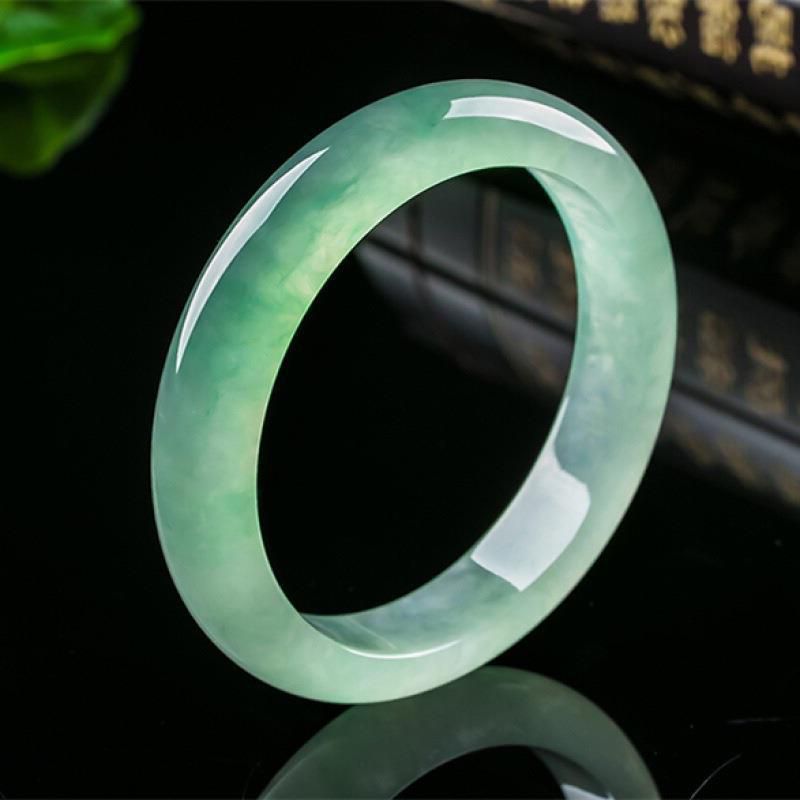
Jadeite is the harder of the two, takes a glassy polish, and produces the colours most people picture when they hear "jade" — imperial and apple green, icy translucent white, lavender, blue. It is judged on colour, translucency and texture, and it comes almost entirely from northern Myanmar. Choose it if you want light moving through the stone and colour that carries across a room. → Jadeite jade jewelry
Nephrite is slightly softer but tougher — the toughest gem material there is — with a warm, waxy lustre rather than a glassy one. It is the original Chinese jade: the stone of Liangzhu ritual discs, Han burial suits and Silk Road tribute, and it deepens in lustre the longer it is worn. Choose it if you want warmth, durability and the older tradition. → Nephrite jade jewelry
Then: which piece?
Bracelets and bangles — the most traditional form, and the one most connected to Chinese jade culture. Solid bangles are heirloom pieces sized to the millimetre; beaded and strung styles adjust to any wrist, which makes them the safest gift.
Necklaces and pendants — the form that carries a specific message. A carved pendant — Buddha, Guan Yin, peace buckle, dragon, Pixiu — says something particular about the person wearing it, which is why pendants are the most given jade piece.
Rings — the piece you look at all day. Adjustable bands remove the sizing risk that makes rings hard to buy online.
Earrings and studs — the only jade worn at eye level, and the only form that requires two stones matched to each other by hand.
Buying a first piece? A pendant or a strung bracelet. Both are easy to wear, neither depends on an exact measurement, and both carry the meaning that makes jade worth giving.