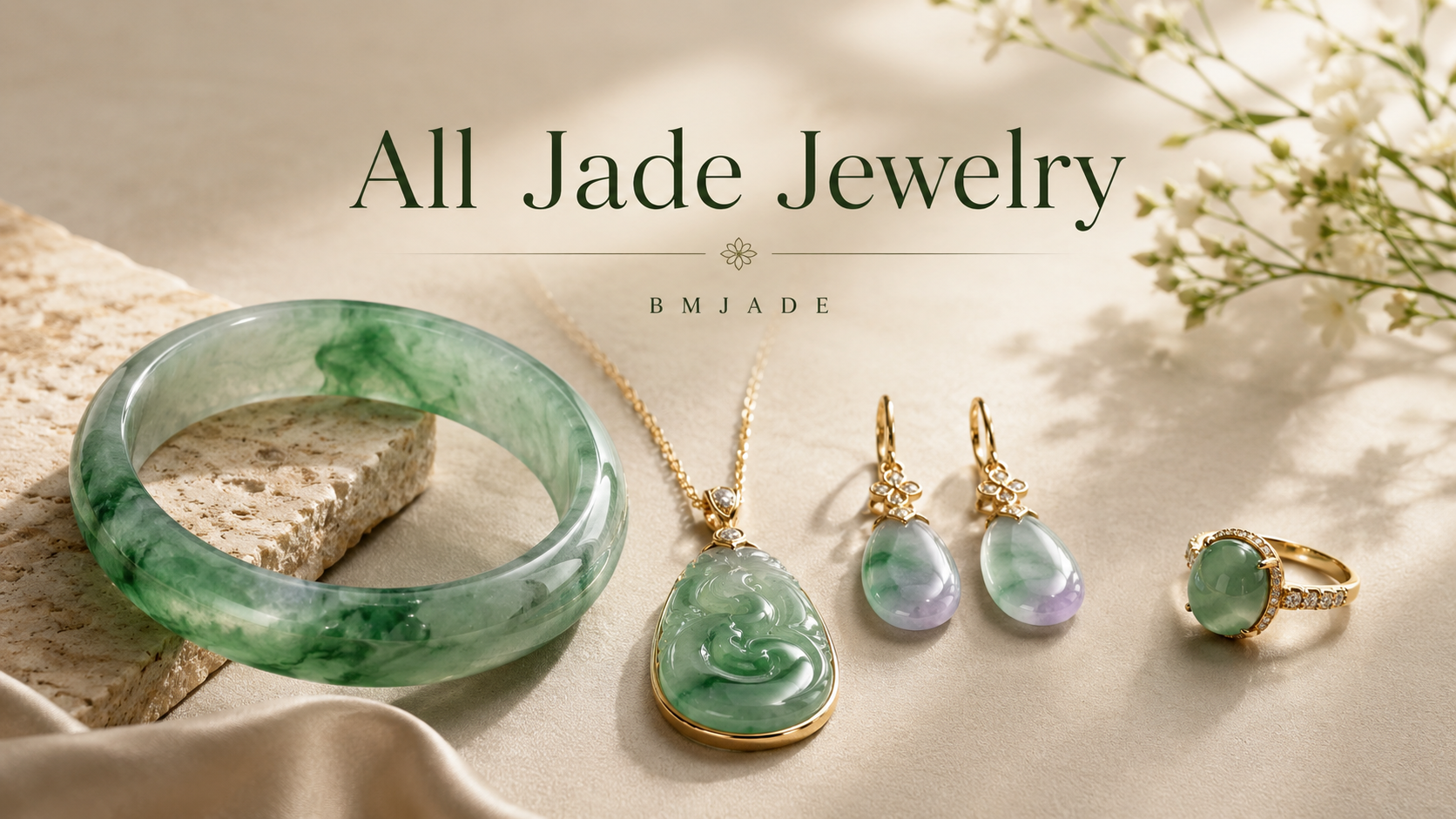
For over eight thousand years, jade has been the beating heart of Chinese civilization. It is more than a gemstone; it is a vessel for virtue, a symbol of heaven, and a physical manifestation of the soul. However, for many international collectors, the world of Chinese jade can seem like an impenetrable labyrinth. Often, the term "jade" is used as a monolithic catch-all, yet in reality, it encompasses a vast spectrum of minerals, each with its own unique geological signature, cultural history, and market value.
To truly appreciate a jade bracelet or pendant, one must look beyond the surface color. You must understand the difference between the brilliant, glassy "King of Jade" (Jadeite) and the subtle, oily "Soul of Jade" (Hetian Nephrite). You must also recognize the regional treasures like Dushan Jade and Xiuyan Jade that have shaped Chinese art for millennia.
This ultimate guide will serve as your comprehensive atlas to the diverse world of Chinese jade varieties, taking you from the rugged mines of Myanmar to the ancient riverbeds of Xinjiang.

1. Introduction: The Scientific and Cultural Duality of Jade
In Western mineralogy, "jade" was once thought to be a single stone. It wasn't until 1863 that French mineralogist Alexis Damour discovered that jade is actually two distinct minerals: Jadeite and Nephrite.
-
Jadeite (Hard Jade / Fei Cui): A sodium aluminum silicate. It is harder, rarer, and prized for its vivid colors and high translucency.
-
Nephrite (Soft Jade / Ruan Yu): A calcium magnesium silicate. It is known for its extreme toughness, oily luster, and "warm" tactile feel.
In China, the definition is even broader. "Jade" (Yu) often includes other beautiful stones that meet the criteria of "The Five Virtues of Jade": benevolence, integrity, wisdom, courage, and purity. This guide will focus on the four most significant varieties: Jadeite, Hetian Jade, Dushan Jade, and Xiuyan Jade.

2. Jadeite (Fei Cui): The King of Jade
Jadeite is the most commercially valuable variety of jade in the modern world. While the best jadeite is found in Myanmar, its cultural home is undeniably China.
Understanding Jadeite Raw Materials and the Art of "Window Opening"
The journey of a jadeite bracelet begins inside a "Gambling Stone"—a raw boulder covered in a thick, weathered crust that hides the treasure within. Because no modern technology can perfectly see through this crust, dealers use a technique called "Window Opening" (Kai Chuang).
-
The Technique: A small area of the crust is ground away or sliced to reveal the "meat" of the jade.
-
The Identification: Experts use high-powered flashlights to peer through these tiny windows. They look for the "water head" (translucency) and the "color root" (the source of the green). A successful window opening can increase the value of a raw stone a hundredfold, but it requires deep knowledge to distinguish between a "green layer" that is skin-deep and a rich vein that runs through the entire stone.
Distinguishing Between Seed Materials and Mountain Materials
Just like diamonds or gold, the geological origin of jadeite dictates its quality.
-
Mountain Materials (Shan Liao): These are mined directly from primary deposits in the mountains. They tend to have sharper edges and a coarser internal structure.
-
Seed Materials (Zi Liao): These are stones that have been washed into riverbeds by centuries of erosion. The natural "tumbling" process in the water removes the weaker, brittle parts of the stone, leaving only the densest, most high-quality core. Jadeite seed materials are highly sought after for their superior density and "fine-grained" texture.

3. Hetian Jade (Nephrite): The Essence of Warmth and Virtue
If Jadeite is the "King," then Hetian Jade is the "Sage." Originating from the Kunlun Mountains in Xinjiang, Hetian Jade is the most prestigious nephrite in the world.
The Core Characteristics: Warmth and Oiliness
The most important term in Hetian Jade collection is "Oiliness" (You Xing). Unlike the glassy shine of jadeite, Hetian jade has a unique luster that resembles sheep fat or beeswax.
-
Visual Oiliness: When you look at a high-quality Hetian white jade bracelet, it doesn't just reflect light; it seems to emit a soft, internal glow. It looks as though a layer of grease is resting on the surface, even though it is bone-dry.
-
Tactile Oiliness: When touched, the stone feels incredibly smooth and "warm"—never as cold as glass. This is due to the extremely fine, felt-like interlocking structure of the tremolite fibers within the stone.
The Warm Texture of White Jade
The "Warm Texture" (Wen Run) is a physical and philosophical attribute. Physically, it refers to the stone's ability to retain heat and its silky-soft surface. Philosophically, it represents the "gentlemanly" nature of the wearer—subtle, deep, and resilient. The most famous variety is Mutton Fat Jade (Yang Zhi Yu), which is pure white with a perfect oily luster.
Selection and Quality Identification
When choosing a Hetian jade bracelet, focus on the following:
-
Texture Fineness (Xi Du): Under a light, a top-tier Hetian jade should show almost no "grain" or "flocculent" structure. The finer the texture, the more "oily" the stone will become over time with wear.
-
Color Purity: While "Mutton Fat White" is the pinnacle, Hetian jade also comes in Sugar Jade (brownish-red), Topaz (yellow), and Ink Jade (black). The color should be saturated and even, without gray or muddy undertones.
-
Density and Weight: Hetian jade is surprisingly heavy for its size. If a bracelet feels light or "plastic-like," it is likely a fake.

4. Dushan Jade: The Multi-Colored Treasure from Nanyang
Dushan Jade, mined in Henan Province, is one of the four famous jades of China. It is often called the "Chinese Jadeite" because of its vibrant colors and high hardness.
The Unique Charm of Dushan Jade
Dushan jade is a multi-mineral rock, which gives it a "calico" or multi-colored appearance. A single piece of Dushan jade can contain white, green, purple, yellow, and black.
-
The "Nanyang Green": High-quality green Dushan jade can look remarkably like imperial green jadeite, though its luster is slightly more waxy.
How to Judge Quality
When selecting Dushan jade, the key is the vibrancy of color. Look for pieces where the colors are distinct and bright rather than muddled. Because Dushan jade has a relatively complex mineral composition, "translucency" is a major value driver. A "watery" Dushan jade with emerald green and pure white patches is a true collector's item.

5. Xiuyan Jade: The Ancient Folk Jade
Hailing from Liaoning Province, Xiuyan Jade is perhaps the most historically used jade in China. It was used to carve the famous "Jade Burial Suits" of the Han Dynasty.
Distinguishing the Varieties
Xiuyan Jade is divided into two distinct types:
-
Serpentine Jade (Xiuyu): This is the most common type. It is known for its beautiful, bright green color and high transparency. However, it is relatively soft (Mohs 4.5-5.5).
-
Tremolite Jade (Old Jade / He Mo Yu): This is geologically similar to Hetian Jade. It is much harder and more valuable, often found as "river-rubbed" stones with a thick natural skin.
Quality Assessment for Buyers
Xiuyan jade is prized for its "cleanness." Look for stones that are free of black spots (chromite) and cracks. Because Xiuyan jade is often more affordable than Jadeite or Hetian jade, it is an excellent "entry-level" stone for new collectors who want a large, beautiful green bangle without the five-figure price tag.
6. Comparative Analysis: Which Jade is Right for You?
Choosing the right jade variety depends on your lifestyle, budget, and aesthetic preference.
| Feature | Jadeite (Fei Cui) | Hetian Jade | Dushan Jade | Xiuyan Jade |
| Luster | Glassy / Brilliant | Oily / Waxy | Vitreous / Greasy | Silky / Glassy |
| Hardness | 6.5 - 7.0 (Hard) | 6.0 - 6.5 (Tough) | 6.0 - 7.0 | 4.5 - 6.0 |
| Primary Color | Vivid Emerald Green | Mutton Fat White | Multi-colored | Translucent Green |
| Best For | Investment & Status | Zen & Daily Wear | Artistic Carving | Affordable Elegance |
-
Choose Jadeite if you want a "statement" piece with high transparency and the potential for investment growth.
-
Choose Hetian Jade if you value the "nourishing" feel of the stone and prefer a subtle, elegant look that gets better with time.
-
Choose Dushan or Xiuyan for unique, colorful designs and historical significance at a more accessible price point.

7. Conclusion: Starting Your Jade Collection Journey
The world of Chinese jade is a lifelong study. From the "oiliness" of a Hetian seed material to the "water" of a Myanmar jadeite, each stone tells a story of geological patience and human craftsmanship.
As you begin your collection, remember the old Chinese proverb: "Gold has a price, but Jade is priceless." This doesn't just refer to money; it refers to the unique bond that forms between a wearer and their stone. Whether you are drawn to the fiery brilliance of Jadeite or the soulful warmth of Hetian Nephrite, your choice of jade is a reflection of your own inner "virtue."
At BMjade, we specialize in sourcing authentic, natural varieties of these four legendary jades. Explore our Chinese Jade Collection today and find the piece that resonates with your spirit.