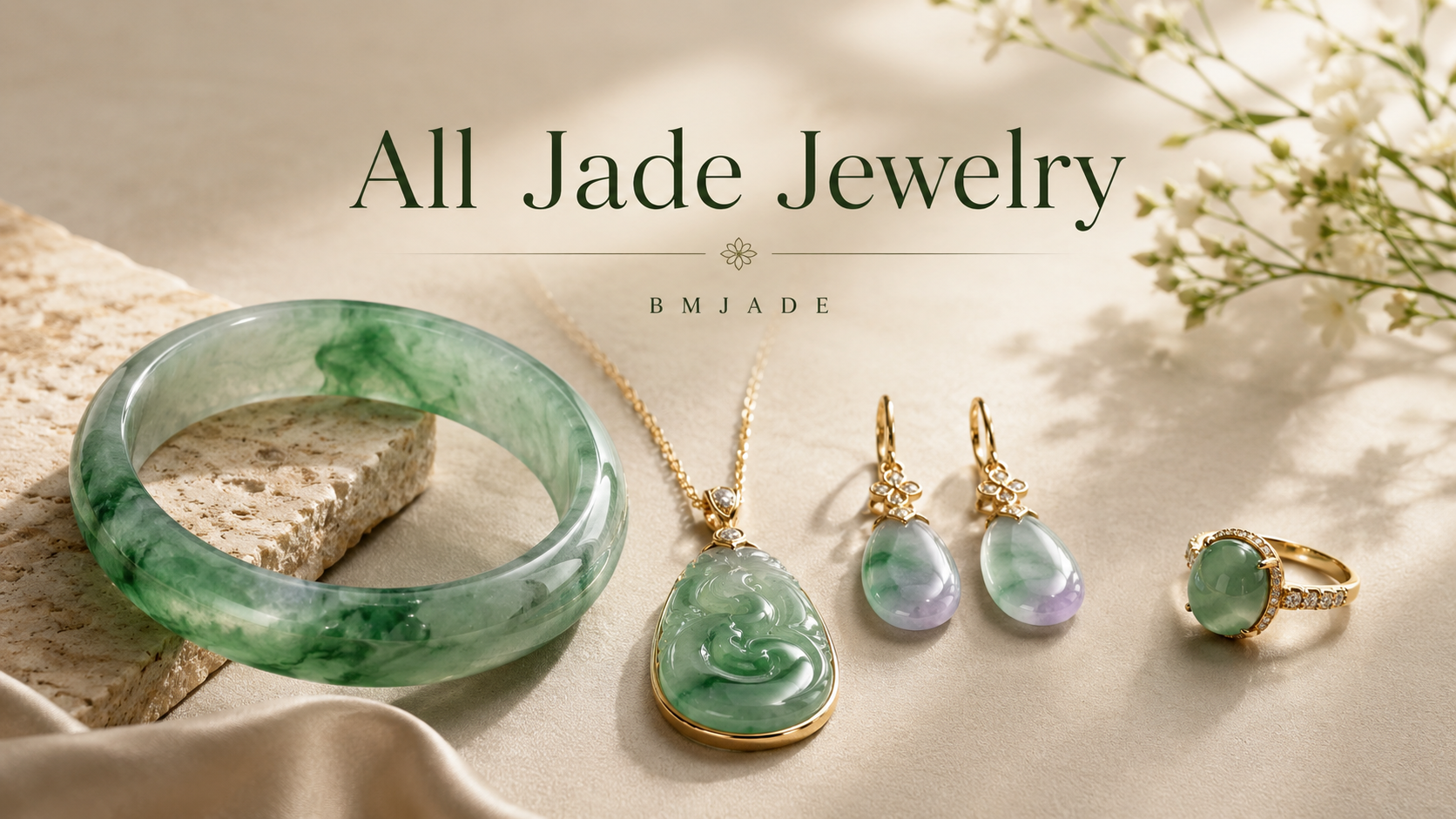
Most jade care questions are not really about cleaning. They are about permission: can I keep this on in the shower, can I sleep in it, does it matter if it gets wet, will my hand cream do something to it.
This guide answers those first, then covers cleaning. If you are still choosing a piece, our jade bracelets and bangles are listed with exact measurements and treatment disclosure, and a well-polished Type A bangle is meaningfully easier to look after than a treated one.

The Quick Rules
| Situation | Verdict |
|---|---|
| Getting wet occasionally | Fine. Dry it fully afterwards |
| Daily shower | Take it off. Not the water — the shampoo, oils and steam |
| Swimming | Take it off. Chlorine, salt, sunscreen, and wet hands near hard edges |
| Sleeping | Depends on fit. A snug bangle is fine; a loose one meets the bed frame |
| Gym, gardening, heavy housework | Take it off. Every time |
| Hand cream, perfume, sanitiser | Apply first, let it dry, then put the bangle on |
| Cooking | Fine, but not with heavy pans and not near a hot oven door |
| Cold weather to hot water | Avoid. Sudden temperature swings stress existing flaws |
| Ultrasonic or steam cleaner | Never at home |
The one-line version: jade handles water, not chemicals; and it handles wear, not impact.
Can You Shower With a Jade Bracelet?
You can, occasionally, without harm. As a daily habit, take it off.
The water is not the problem. The problem is everything else in a shower — shampoo, conditioner, body wash, fragrance, and oils all leave residue that builds on the polish and dulls it. Steam and hot water are also hard on cords, metal fittings, adhesives, and any previous repair.
There is a second reason that matters more than the chemistry. Wet hands and a wet bathroom are where bangles die. A slippery bangle over a tiled floor, a porcelain sink, or a stone shower tray is the single most common way a jade bangle breaks. If you take nothing else from this page, take that.
If it does get wet, rinse it in clean water and dry it completely.
Can Jade Get Wet?
Yes. Natural jade is not water-soluble and brief contact with clean water is harmless — it is how you clean it.
What jade does not like is staying wet. Do not put a damp bangle into a pouch or a closed box; moisture trapped against the stone can affect any metalwork, cord, or adhesive on the piece, and a bead bracelet's elastic weakens faster if it is stored damp.
Treated jade is a different case. Type B jadeite is impregnated with polymer, and repeated hot water and chemical exposure accelerates its degradation. If you are not certain your piece is Type A, be more conservative than this page suggests — and consider having it checked. See how to tell if a jade bracelet is real.
Can You Swim With a Jade Bracelet?
No — take it off.
Chlorine and saltwater are both harsher than anything jade meets in a normal day. Sunscreen leaves a stubborn film. And a pool is a hard environment: tiled edges, concrete surrounds, ladder rails, and wet slippery hands.
Put it in a soft pouch in your bag rather than in a locker tray where it can slide.
Can You Sleep With a Jade Bracelet?
This one genuinely depends on your bangle, and it is the question we get asked most.
A well-fitted solid bangle is usually fine. Many people wear one continuously for years and the tradition assumes it. If it sits snugly and does not travel up your forearm, it will not meet much in the night.
A loose bangle is not fine. A bangle that slides freely will find the bed frame, the wall, the nightstand, or another piece of jewelry. This is a common overnight breakage.
Bead and cord bracelets are better off removed. Sleeping on elastic compresses and fatigues it, and knotted cord takes the same abuse. You will get years more out of a strand you take off at night.
If you want to sleep in a bangle and are not sure whether yours is snug enough, the test in our size guide is the one to run: a correct bangle is snug over the knuckles and then moves about an inch on the wrist — not more.
Cosmetics, Perfume and Sanitiser
None of these will dissolve jade. All of them leave film.
The habit worth building is order of operations: skincare, perfume and sunscreen first, let it dry, then the bangle. Hand sanitiser is the one most people forget, and in a normal week it is applied more often than anything else on the list.
Alcohol-based products deserve particular caution on pieces with cord, metalwork, or any prior repair — not because of the stone, but because of everything attached to it.
How to Clean a Jade Bracelet
The whole method:
- Wipe with a soft microfibre cloth.
- Rinse briefly in lukewarm water.
- If it needs more, one small drop of mild soap.
- Work the surface gently with your fingers or a soft cloth.
- Rinse all the soap away.
- Dry completely with a clean lint-free cloth.
- Let it air-dry fully before putting it away.
That is the entire procedure, and there is no advanced version. Jade does not need a routine more elaborate than this, and elaborate routines are how surfaces get damaged.
For carved bangles, bead strands, and pieces with metal fittings, pay attention to the gaps where water and soap sit. Dry those carefully — trapped moisture is the main thing that shortens a cord's life.
How often
- After wearing — a wipe with a soft cloth
- Weekly — a quick look for residue, new marks, or anything loose
- Monthly — lukewarm water and mild soap if it needs it
- Always before storing — completely dry
Do not over-clean. Jade care is gentle and consistent, not thorough.
What Will Damage Your Jade
Ultrasonic and steam cleaners. Some gemmological references consider these acceptable for untreated jade under controlled conditions. At home you usually cannot confirm whether a piece has an internal fracture, a previous repair, wax, glue, dye, or polymer — and ultrasonic vibration adds nothing that warm water does not already do. Never, if the piece is inherited, bought from an unknown seller, previously repaired, or without treatment testing.
Toothpaste and baking soda. Abrasives. They brighten a surface initially and leave a network of fine scratches that shows within weeks. The polish on good jade cannot be restored at a bathroom sink.
Bleach, ammonia, vinegar, acidic cleaners, strong detergent, jewelry dips. Unnecessary for jade and actively risky for treated stones, repairs, cords, and metal.
Toothbrushes, metal brushes, rough towels, polishing pads. Fingers and microfibre only.
Boiling water. Hot water achieves nothing that lukewarm does not, and thermal shock pushes existing flaws along. This matters most on pieces with hidden fractures, adhesives, cords, or settings.
Why Does My Jade Look Dull?
Three causes, and they need different answers.
Residue — skin oil, lotion, soap film, dust. This is the common one, and gentle cleaning fixes it.
Fine scratching — from contact with harder jewelry, rough cloth, or an abrasive cleaner. Washing will not help. It needs professional polishing, covered in our repair guide.
Wax or coating wearing off — some pieces are finished with wax, and as it wears the surface underneath looks different. If your bangle noticeably changed appearance in the first year, this is worth investigating, because it can also indicate treated material.
Stop and get it checked if a bangle suddenly changes color, looks cloudy inside, or develops a line that was not there. Do not attempt vigorous cleaning on a piece behaving unexpectedly.
Cleaning Versus Cleansing
Worth separating, because searches for these two run together.
Cleaning is what this page covers: removing residue with water and a cloth.
Cleansing is the traditional practice of energetically preparing a new or inherited piece before wearing it — a different thing entirely, with its own methods and its own reasons. That is covered in how to cleanse new jade.
Bead Strands and Cord Bracelets
The jade beads are cleaned like any other jade. The cord is the part that limits the piece's life.
Do not soak a strand. Moisture weakens elastic and loosens knots, and a strand that is repeatedly stored damp will fail a year or two early. Wipe the beads, keep the cord as dry as you can, and let it air-dry fully before it goes away.
Replace elastic every one to two years as maintenance, not after it snaps. A strand that breaks on your wrist scatters jade beads across a floor.
If a cord is stretching, fraying, or leaving gaps between beads, restring it now.
When to Stop and Ask Someone
Do not attempt repairs at home with glue or household tools. Get a professional to look at it if:
- There is a visible crack
- It was dropped on a hard surface, even if it looks intact
- A bead cord is weakening
- A metal setting has loosened
- There are deep scratches
- The piece is valuable, certified, or irreplaceable
- The treatment history is unknown
Details on what can and cannot be fixed are in the jade bracelet repair guide.
FAQ
Can you shower with a jade bracelet?
Occasionally, without harm. Not as a daily habit — shampoo, conditioner and oils leave residue that dulls the polish, and steam is hard on cords, metalwork and repairs. The bigger risk is dropping a slippery bangle onto a tiled bathroom floor.
Can jade get wet?
Yes. Jade is not water-soluble and rinsing is how you clean it. What matters is drying it fully and never storing it damp.
Can you sleep with a jade bracelet?
A snugly fitted solid bangle is usually fine and many people wear one continuously. A loose bangle is not — it will find the bed frame. Bead and cord bracelets last longer if you take them off at night.
Can you swim with a jade bracelet?
No. Chlorine, saltwater and sunscreen are all harsher than a normal day, and pool edges plus wet hands are a bad combination for a rigid stone ring.
Can I clean jade with soap?
Yes — one small drop of mild soap in lukewarm water. Avoid detergent, bleach, ammonia, vinegar, and jewelry dips.
Can I use an ultrasonic cleaner on jade?
Not at home. Warm water and a soft cloth do everything necessary without the risk, and most owners cannot confirm whether their piece has an internal fracture or a previous repair.
Can I use toothpaste to polish jade?
No. Toothpaste is abrasive and leaves fine scratching that becomes visible within weeks.
Does hand cream or perfume damage jade?
They will not dissolve it, but they leave film that builds up on the polish. Apply skincare and fragrance first, let it dry, then put the bangle on.
Why does my jade bracelet look dull?
Usually residue, which cleaning fixes. If it survives cleaning it is likely fine scratching, which needs professional polishing. A sudden change in appearance is worth having checked.
How often should I clean my jade bangle?
Wipe it after wearing. Deep clean with lukewarm water and mild soap every few weeks or monthly, and only when it needs it.
Can I wear a jade bracelet every day?
Yes — that is what a bangle is for, and continuous wear is what deepens the luster over years. Take it off for the gym, gardening, heavy housework, swimming, and showering, and you will have it for decades. See how long jade bracelets last.
Final Thoughts
Jade does not need a complicated routine. Wipe it after wearing, wash it with lukewarm water when it needs it, keep chemicals and abrasives away from it, take it off before the shower and the gym, and dry it before it goes away.
The one habit that matters more than all the cleaning: be careful in bathrooms and kitchens. Nearly every broken bangle we hear about went down onto tile.
For where to keep it and how long it should last, see how long jade bracelets last and how to store them. To choose a piece made for daily wear, browse our jade bracelet collection.