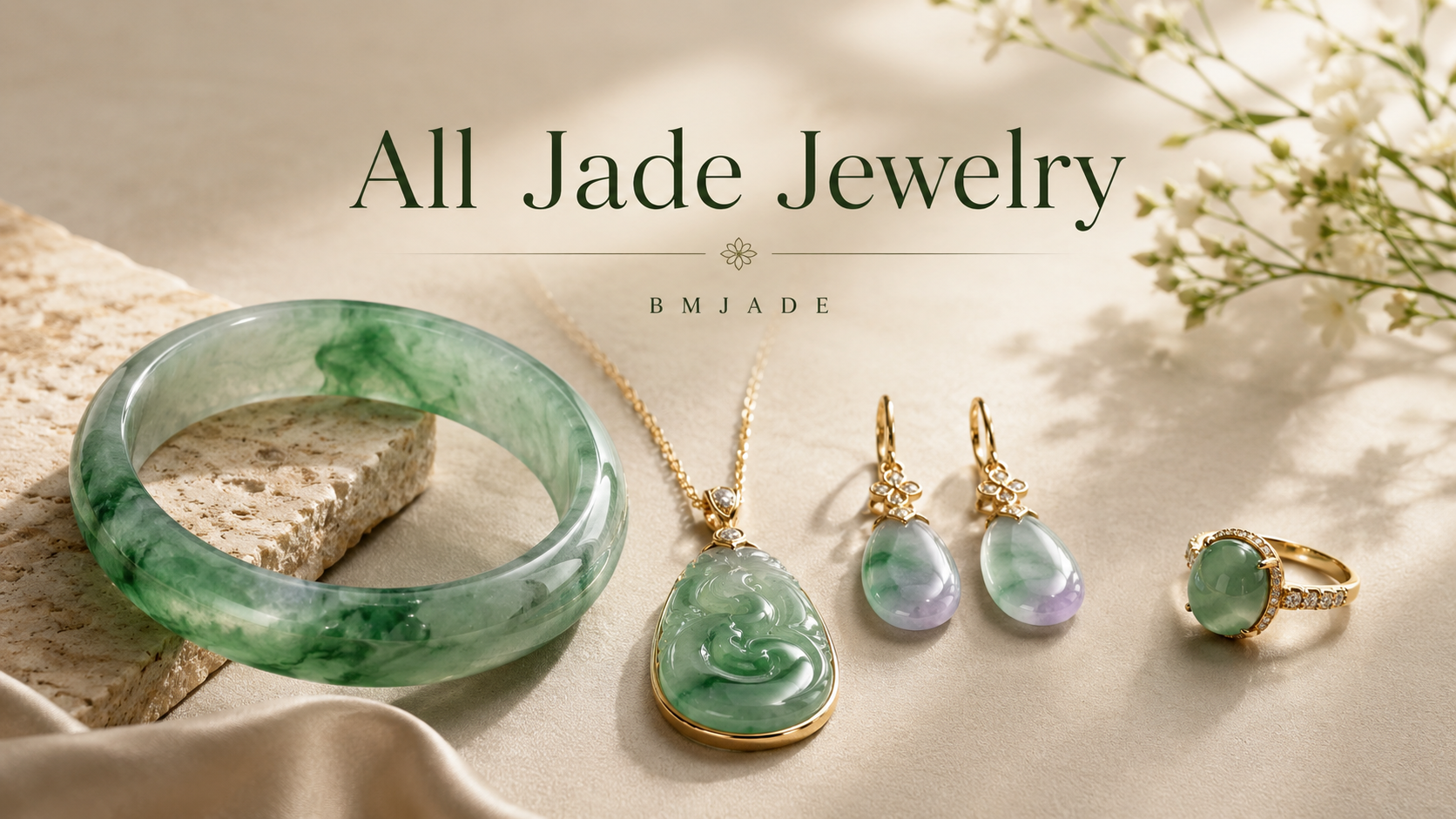
A jade bracelet is not just another piece of jewelry. For many wearers, it carries memory, protection, family meaning, or a personal connection built through daily wear. That is why a scratch, crack, or break can feel emotional as well as practical.
The most important question is simple: can a jade bracelet be repaired?
The answer depends on the type of damage. Light surface dullness may only need gentle cleaning. Fine scratches may sometimes be improved by professional polishing. A cracked jade bangle may need reinforcement, gold wrapping, or careful inspection. A bracelet broken into several pieces may not be restored as a wearable bangle, but it can often be repurposed into a pendant, ring, bead, or keepsake.
At BMjade, we work with Type A natural jadeite and always recommend a conservative approach. Valuable jade should not be repaired at home with glue, toothpaste, sandpaper, or household polishing products. A jade bracelet can last for generations, but only if the repair is handled with respect for both the stone and its structure.
This guide explains how to identify jade bracelet damage, what repair options may be possible, when gold inlay makes sense, and when replacing or repurposing the bracelet is the wiser choice.
If your bracelet cannot be safely repaired, choose a well-measured Type A jadeite bracelet for daily wear.
Quick Answer: Can a Jade Bracelet Be Repaired?
Yes, some jade bracelets can be repaired, but not every type of damage can be fixed in the same way.
Minor surface dullness can often be improved with gentle cleaning. Small surface scratches may be reduced by a professional lapidary through polishing. Hairline cracks may be stabilized with gold tracing, gold wrapping, or metal reinforcement. A jade bangle broken into two or three clean pieces may sometimes be repaired with gold inlay or converted into a hinged bracelet.
However, a jade bracelet that is shattered into many small pieces usually cannot be restored as a strong wearable bangle. In that case, repurposing the jade into a pendant, earrings, ring, or memorial piece may be more realistic.
If your jade bracelet has sentimental or financial value, do not attempt DIY repair. Photograph the damage, collect all pieces, store them safely, and consult a professional jade repair specialist or experienced lapidary.
Jade Bracelet Damage Chart: Scratch, Crack, or Break?
Before deciding what to do, identify the damage clearly.
| Damage Type | What It Usually Means | Best Option |
|---|---|---|
| Surface dullness | Oil, dust, soap residue, or wax wear | Gentle cleaning |
| Very fine surface scratches | Light abrasion from daily wear | Professional polishing if valuable |
| Visible scratches | Deeper surface marks | Professional lapidary assessment |
| Hairline crack | Structural weakness or impact stress | Professional inspection, possible gold tracing |
| Clean break into 2–3 pieces | Strong impact or hidden weakness | Gold wrapping, gold inlay, hinge repair, or repurposing |
| Multiple broken pieces | Severe structural damage | Repurpose into smaller jewelry |
| Powdery or crushed break | Major damage | Keep respectfully or replace |
| Loose cord or bead bracelet issue | String or elastic failure, not jade failure | Restringing or bracelet rebuilding |
This chart is only a guide. A jade repair decision should consider the stone quality, bracelet thickness, break location, sentimental value, and whether the jade is natural untreated jadeite or treated material.

First Steps After a Jade Bracelet Breaks
If your jade bracelet breaks, do not throw anything away immediately.
First, collect all pieces carefully. Even small fragments may be useful for repair, repurposing, or gem testing. Place them in a soft pouch or padded box so the broken edges do not rub against each other.
Second, take clear photos of the damage from different angles. Include close-up images of the crack line, broken edges, and full bracelet shape. These photos will help a repair specialist understand whether the bangle can be stabilized.
Third, avoid washing the broken pieces aggressively. If there is dust, gently wipe with a soft dry cloth. Do not soak broken jade in water if the bracelet has metal, glue, old repair, or unknown treatment history.
Fourth, do not apply glue. Household glue can seep into fractures, stain the jade, interfere with future professional repair, and reduce the beauty and value of the piece.
Finally, decide what matters most: restoring wearability, preserving memory, maintaining value, or transforming the broken jade into a new design.
For the cultural meaning of broken jade, you can also read BMjade’s guide to what happens when jade breaks.
Can Jade Bracelet Scratches Be Removed?
Some jade bracelet scratches can be improved, but the right method depends on depth.
A light surface scuff may only affect the polish. In this case, professional polishing can sometimes restore a smoother appearance. A deeper scratch may not disappear completely without removing too much material from the surface.
This is why jade polishing should be done carefully. Jade bangles are shaped with balance and symmetry in mind. Over-polishing one area may change the bracelet’s contour, surface reflection, or thickness.
For valuable Type A jadeite, professional polishing is safer than home methods.
Avoid using:
- Toothpaste
- Baking soda
- Sandpaper
- Nail buffer blocks
- Metal polish
- Jewelry dips
- Abrasive cleaning cloths
- Diamond paste without professional skill
These products may make the surface look temporarily brighter, but they can also create fine scratches, uneven shine, or permanent surface damage.
If the bracelet only looks dull, clean it gently first. Use lukewarm water, a small amount of mild soap if needed, and a soft microfiber cloth. If the mark remains after cleaning, it is likely a scratch rather than residue.
Why DIY Toothpaste and Glue Are Risky
Many online tips suggest toothpaste, baking soda, clear nail polish, or household glue for jade repair. These methods are risky, especially for natural jadeite bracelets.
Toothpaste and baking soda are mild abrasives. They are designed for teeth or household cleaning, not for preserving the polished surface of jade. On a low-value item, the damage may not matter. On a fine jade bracelet, the wrong abrasive can reduce the surface quality.
Glue is even more problematic. A rigid jade bangle is under stress when worn, especially when passing over the hand or receiving impact. Ordinary glue is not designed to restore the structural strength of a broken jade bracelet. It may hold temporarily, but it can fail suddenly during wear.
Glue can also discolor the fracture line, trap dirt, and make later professional repair more difficult.
A simple rule is:
If the jade is valuable, sentimental, certified, or worn daily, do not DIY the repair.
Can a Cracked Jade Bracelet Be Fixed?
A cracked jade bracelet may sometimes be stabilized, but it should be evaluated carefully.
A hairline crack does not always mean the bracelet will break immediately. Some cracks are shallow surface-reaching fractures. Others go deeper and weaken the structure of the bangle. The danger is that a crack can expand under pressure, especially when the bracelet is pulled over the hand or accidentally knocked.
Common repair options for cracked jade include:
Professional Polishing
If the crack is actually a surface scratch or shallow abrasion, polishing may improve the appearance.
Gold Tracing
Gold tracing can follow the crack line and turn it into a decorative detail. This is mainly suitable for visible but limited cracks.
Gold Wrapping
Gold wrapping can reinforce a damaged area by placing metal around part of the bracelet. This is often used when a crack needs more support than surface decoration.
Structural Reinforcement
In some cases, a specialist may use metalwork to stabilize the bangle. This can include gold, silver, or custom settings depending on the bracelet and design.
Not every cracked bracelet should continue to be worn. If the crack is deep, spreading, or located in a high-stress area, repair may be decorative rather than fully protective.
Gold Inlay and Gold Wrapping for Broken Jade Bracelets
Gold inlay and gold wrapping are among the most beautiful ways to repair jade. In Chinese jade culture, visible repair can transform damage into a new design rather than hiding it completely.
This approach is sometimes compared with Japanese kintsugi because both traditions allow repair to become part of the object’s story. However, the materials, techniques, and cultural backgrounds are different. For jade, gold inlay or gold wrapping is often used not only for beauty but also for reinforcement.
Gold Inlay
Gold inlay usually refers to decorative metalwork placed along cracks, lines, or carved channels. It can highlight the repair and make the bracelet look intentionally designed.
Gold Wrapping
Gold wrapping usually involves metal bands or covers placed around broken or weakened sections. It can help connect broken pieces or protect vulnerable areas.
Gold Hinge Repair
If a rigid bangle breaks cleanly, a jeweler may sometimes convert it into a hinged bracelet. This allows the bracelet to open and close instead of sliding over the hand. This option can preserve the jade while making the piece easier to wear.
Decorative Gold Covering
For breaks at the edge or corner of a bangle, a gold cover may hide and protect the damaged area while adding visual contrast.
Gold repair works best when the jade pieces are clean, the break is not too fragmented, and the bracelet has enough thickness for secure metalwork.

When Gold Inlay Is Not the Best Option
Gold repair is beautiful, but it is not always the right choice.
It may not be suitable if:
- The bracelet is broken into many small pieces.
- The jade is too thin to support metalwork.
- The break passes through several weak points.
- The repair cost is higher than the value of the jade.
- The owner wants an invisible repair.
- The bracelet will be worn heavily every day.
- The jade is treated, unstable, or badly fractured.
A professional repair specialist should be honest about whether the repaired bracelet is safe for wear. Some repaired bangles are better kept as display pieces or occasional-wear jewelry.
If the bracelet has strong sentimental value, repair may still be worthwhile even if it does not restore full market value.
Can a Broken Jade Bracelet Be Made Into New Jewelry?
Yes. Repurposing is often the best option when a jade bracelet cannot be safely repaired as a bangle.
A broken jade bangle can sometimes become:
- A jade pendant
- A pair of jade earrings
- A jade ring face
- A small charm
- A bead or carved accent
- A gold-mounted keepsake
- A framed memory piece
Repurposing is especially meaningful when the bracelet came from a family member, a partner, or an important life moment. Instead of trying to hide the break, the jade becomes a new object with a continued story.
For example, a clean curved section of jade may be set into a pendant. Smaller matching pieces may become earrings. A larger smooth fragment may be polished into a ring face or small charm.
This option is usually more stable than forcing a badly broken bangle back into bracelet form.
Repair vs Replace: Which Option Is Better?
The right choice depends on value, sentiment, and practicality.
Repair may be better if:
- The bracelet has strong emotional meaning.
- The jade quality is high.
- The break is clean.
- The bracelet can be reinforced safely.
- Gold repair would enhance the design.
- The repair cost feels reasonable to you.
Replace may be better if:
- The bracelet is badly shattered.
- The jade is low-value or treated.
- The repair would be unstable.
- You need a bracelet for daily wear.
- The cost of repair is higher than buying a better piece.
- The original size or structure was already uncomfortable.
If your bracelet cannot be safely repaired, replacing it can still be meaningful. Many people choose a new jade bracelet not to erase the old one, but to begin a new chapter.
When choosing a replacement, look for clear measurements, smooth polish, and reliable treatment disclosure. BMjade offers Type A jadeite bracelets selected for natural beauty, comfort, and daily wear.
Is a Repaired Jade Bracelet Still Valuable?
A repaired jade bracelet may still have value, but repair usually affects market value.
For collectors, an unrepaired Type A jadeite bangle in excellent condition is generally more desirable than a repaired one. Visible cracks, breaks, or repairs may reduce resale value.
However, value is not only financial. A repaired jade bracelet can have strong personal, artistic, and cultural value. Gold inlay may make the piece visually unique. A family jade bracelet repaired with care may become more meaningful after repair.
The key is honesty. If you sell or gift a repaired jade bracelet, the repair should be disclosed clearly.
How to Care for a Repaired Jade Bracelet
A repaired jade bracelet needs gentler care than an undamaged bangle.
Avoid ultrasonic cleaners and steam cleaners because vibration, heat, and moisture may affect adhesives, settings, hinges, or metalwork. Do not soak a repaired jade bracelet for long periods.
Clean it with a soft dry cloth after wearing. If needed, wipe gently with a slightly damp cloth and dry immediately.
Avoid wearing repaired jade during:
- Exercise
- Swimming
- Showering
- Heavy housework
- Gardening
- Cooking with heavy pots
- Moving furniture
- Activities involving hard impact
Store repaired jade separately in a soft pouch or padded box. Do not stack it with watches, metal bangles, diamonds, or other hard jewelry.
For regular jade bracelet care, you can also read BMjade’s jade bracelet care and cleaning guide.
How to Prevent Jade Bracelets from Breaking Again
Prevention is always better than repair.
First, choose the right size. A bangle that is too tight may require force to put on or remove. A bangle that is too loose may slide too much and hit hard surfaces. If you are unsure, check BMjade’s jade bracelet sizing guide before buying.
Second, avoid wearing jade in high-impact situations. Jade has excellent toughness compared with many gemstones, but a hard drop on tile, stone, or concrete can still break it.
Third, remove jade before swimming, showering, intense exercise, or heavy work.
Fourth, store it separately. Many scratches and chips happen when jewelry pieces rub against each other in a box.
Fifth, inspect your bracelet regularly. If you notice a new crack, clicking sound, rough edge, or visible weak point, stop wearing it until it is checked.
When to Ask a Professional
Ask a professional if the bracelet has visible cracking, a deep scratch, a broken section, loose goldwork, or strong sentimental value.
A good repair specialist should be able to explain:
- Whether the jade can be safely worn after repair
- Whether gold inlay or wrapping is suitable
- Whether polishing would remove too much material
- Whether repurposing is more realistic
- What the repair may do to value
- How to care for the repaired piece
If possible, work with someone experienced in jade specifically, not only general jewelry repair. Jade has its own structure, cultural meaning, and repair traditions.
FAQ About Jade Bracelet Repair
Can a broken jade bracelet be repaired?
Yes, some broken jade bracelets can be repaired, especially if the bracelet breaks cleanly into two or three pieces. Gold wrapping, gold inlay, hinge repair, or repurposing may be possible. If the jade is shattered into many small pieces, full bracelet repair is usually difficult.
Can scratches be removed from jade?
Light surface scratches may sometimes be improved by professional polishing. Deep scratches may not disappear completely without removing too much jade from the surface.
Can I repair jade with glue?
Do not use household glue on valuable jade. Glue may discolor the break, weaken over time, and make professional repair harder later.
Can I use toothpaste to polish jade?
No. Toothpaste is abrasive and can damage the surface polish of jade. Use gentle cleaning only, and consult a professional for polishing.
Can a cracked jade bracelet still be worn?
It depends on the depth and location of the crack. A shallow mark may be cosmetic, but a structural crack can worsen during wear. Have it inspected before wearing it daily.
Is gold inlay good for broken jade?
Gold inlay can be a beautiful and meaningful repair option when the damage pattern is suitable. It can reinforce the piece and turn the repair into part of the design.
Is a repaired jade bracelet less valuable?
Usually, yes, from a collector or resale perspective. However, repaired jade can still have strong personal, artistic, and cultural value.
Can broken jade be turned into a pendant?
Yes. Repurposing broken jade into a pendant, earrings, ring, or charm is often a good option when the original bangle cannot be safely restored.
Should I repair or replace a broken jade bracelet?
Repair is worth considering if the bracelet has high jade quality or strong sentimental value. Replacement may be better if the damage is severe, the repair is unstable, or the bracelet was not suitable for daily wear.
How should I store a repaired jade bracelet?
Store it separately in a soft pouch or padded jewelry box. Keep it away from hard jewelry, moisture, heat, and impact.
Final Thoughts
A scratched, cracked, or broken jade bracelet does not always mean the story is over. Some pieces can be polished. Some can be strengthened with gold. Some can be transformed into new jewelry. Others may be kept respectfully as a memory while a new bracelet takes their place.
The most important thing is to avoid rushed DIY repair. Jade deserves patience, especially if it is natural, meaningful, or valuable.
If your bracelet can be repaired, choose a skilled professional. If it cannot be safely restored, consider repurposing the jade or selecting a new piece with better size, polish, and treatment disclosure.
At BMjade, we believe a jade bracelet should be beautiful, wearable, and honestly represented. If you are ready to choose a new companion for daily wear, explore our jade bracelet collection and find a certified Type A jadeite bracelet that fits your life and meaning.