
How to Identify Flaws in Jade Bangles: Essential Tips for Buyers
Jade bangles are prized for their beauty and cultural significance, but identifying imperfections requires a trained eye. Whether you’re a collector or a first-time buyer, understanding common flaws helps ensure you select a high-quality piece. This guide explores practical techniques to spot issues like cracks, inclusions, and artificial enhancements without relying on advanced tools.
Visual Inspection Under Natural Light
The first step in evaluating a jade bangle is examining it under natural daylight. Artificial lighting can distort colors and hide flaws, making it harder to detect problems. Hold the bangle near a window or outdoors, rotating it slowly to observe all angles.
Surface Cracks and Chips
Look for fine lines or irregularities on the surface. Cracks may appear as thin, white streaks that disrupt the stone’s smooth texture. These flaws weaken the bangle’s structural integrity and can worsen over time. Gently run your fingertip over the surface—a crack will feel like a slight indentation, while a chip may create a raised edge.
Color Consistency
Natural jade often displays subtle variations in hue, but extreme inconsistencies could indicate dyeing or treatment. For example, a bangle with patches of overly vibrant green amidst duller areas might have been artificially colored. Use a magnifying glass to check for color bleeding at the edges or inside crevices, a telltale sign of synthetic dyes.
Assessing Internal Inclusions and Texture
Jade’s internal structure reveals much about its authenticity and quality. While some inclusions are natural, excessive or irregular patterns may signal low-grade material or fraud.
Natural vs. Artificial Inclusions
Natural jade contains mineral inclusions like mica or quartz, which appear as tiny specks or wispy lines. These are harmless and often add character. However, if the inclusions form large, jagged clusters or resemble bubbles, the stone might be composite jade (made by gluing fragments together) or filled with resin.
Texture and Translucency
High-quality jade has a smooth, waxy texture that feels cool to the touch. Rub the bangle gently against your cheek—if it feels rough or warm, it could be a lower-grade imitation. Translucency also matters: hold the bangle up to the light. Premium jade allows light to pass through in a diffused manner, while opaque or overly cloudy sections suggest impurities or poor craftsmanship.
Checking for Structural Weaknesses
A bangle’s durability depends on its structural soundness. Even minor flaws can lead to breakage, especially if worn daily.
Thickness and Uniformity
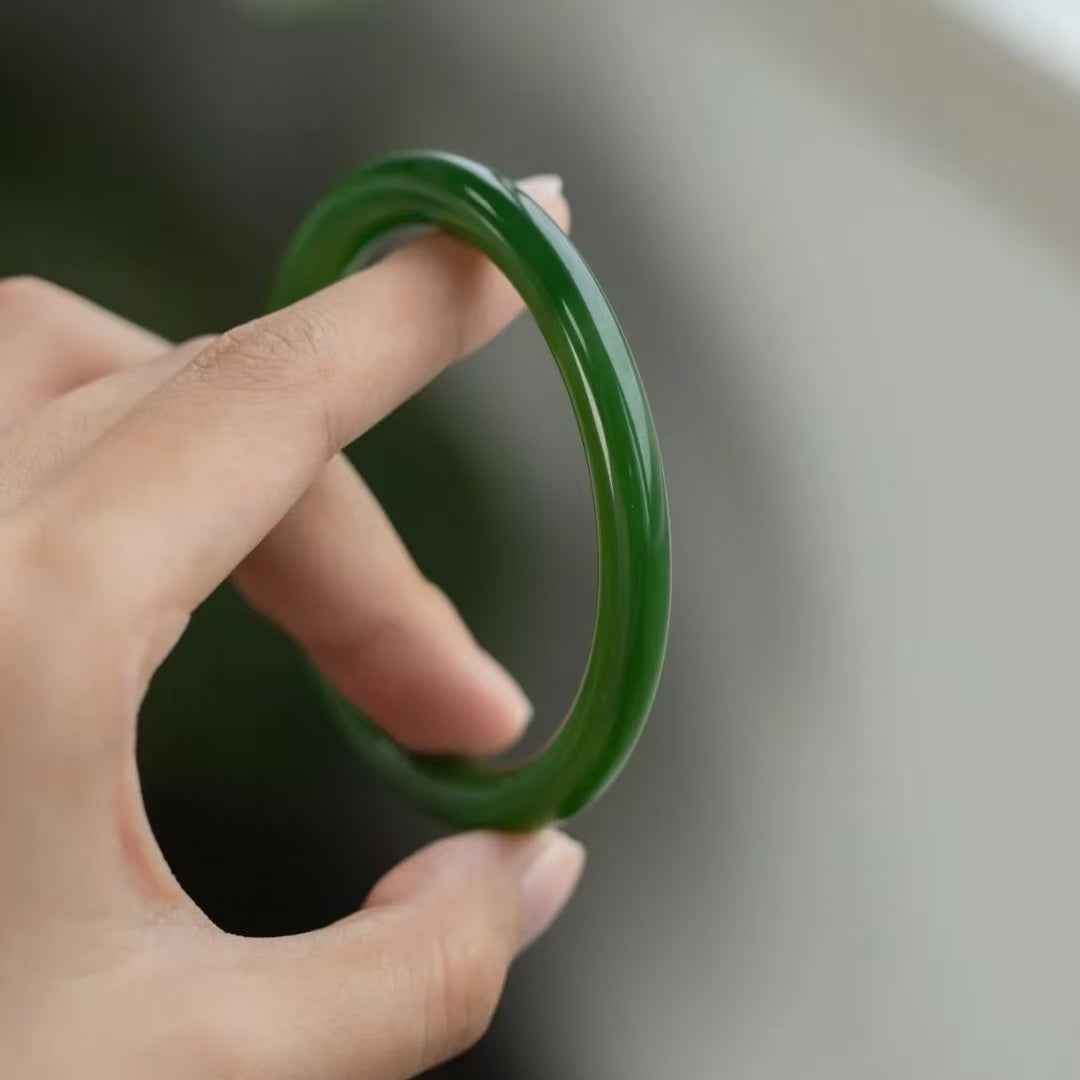
A well-made jade bangle has consistent thickness throughout its circumference. Thin spots or uneven edges are red flags, as they’re more prone to cracking under pressure. Use a caliper or a ruler with millimeter markings to measure the bangle’s width at multiple points. Variations exceeding 1mm indicate poor shaping.
Hidden Fractures with the Tap Test
Gently tap the bangle against a hard surface (like a wooden table) and listen to the sound. A clear, ringing tone suggests solidity, while a dull or hollow sound may reveal internal fractures or fillers. Repeat this test at different sections of the bangle to ensure consistency. Avoid bangles that produce cracking noises, as they’re likely compromised.
Detecting Artificial Treatments and Imitations
The market is flooded with treated or synthetic jades designed to mimic genuine stones. Knowing how to spot these fakes protects you from overpaying for inferior products.
Acid Bleaching and Dyeing
Some sellers use acid to remove impurities from low-grade jade, then dye it to enhance color. These treatments leave the stone brittle and prone to fading. Look for uneven color distribution or a “stained” appearance around drill holes or carvings. Under UV light, dyed jade may fluoresce unnaturally, revealing its artificial nature.
Polymer Impregnation
To improve durability, some jades are filled with resin or plastic. While this makes the stone look flawless, it reduces its value. Check for a glossy, plastic-like sheen or an overly smooth surface. Natural jade has a more organic luster. If the bangle feels lighter than expected for its size, it might be hollowed out and filled with resin.
By mastering these techniques, you can confidently evaluate jade bangles for flaws, ensuring your purchase is both beautiful and enduring. Whether you’re building a collection or seeking a meaningful gift, attention to detail guarantees a piece that stands the test of time.