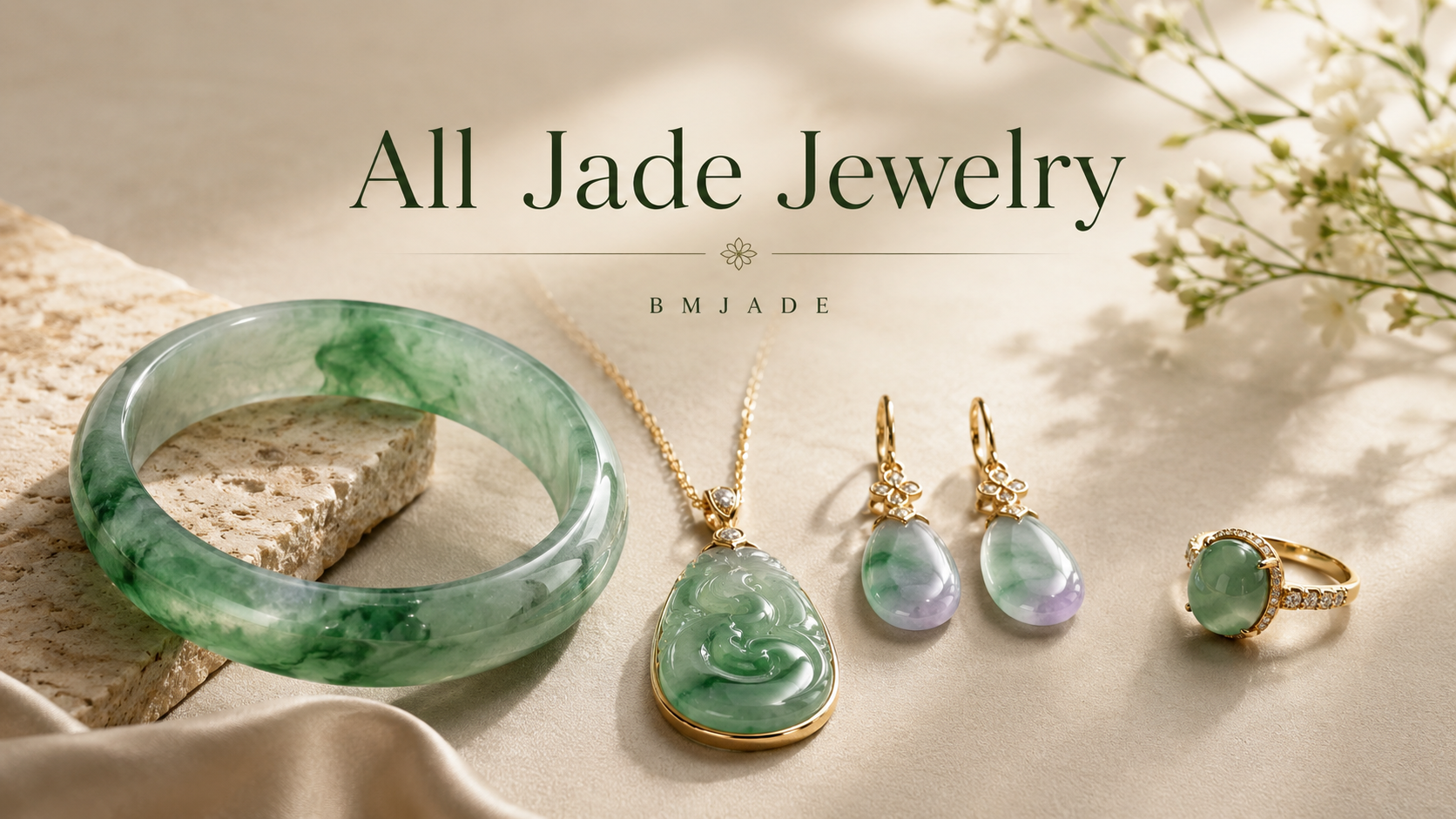
The jadeite market in 2026 is not moving in one simple direction. From the outside, buyers often ask: “Is jade getting more expensive or cheaper?” But inside the jadeite trade, the answer is more complicated.
Top-grade certified Type A jadeite is still strong. Fine Burmese jadeite with vivid color, good translucency, fine texture, and reliable certification remains scarce. Collectors, high-end buyers, and serious jewelry clients continue to compete for the best material.
At the same time, mid-tier jadeite has become more compressed. Livestream platforms, short-video selling, factory-direct inventory, and aggressive online pricing have changed how ordinary jadeite enters the market. Many pieces that once passed through layered retail channels now face direct price comparison online.
This is why I describe the 2026 jadeite market as a bifurcated market: the top is rising, the middle is pressured, and buyers need to understand the difference before paying premium prices.
At BMjade, we focus on certified Type A natural jadeite jewelry because market conditions only make sense when the material is honestly identified. If you are comparing 2026 jadeite prices before buying, start with BMjade’s certified Type A jadeite jewelry and focus on material disclosure, treatment status, certificate details, and realistic quality grading.
Quick Answer: What Is Happening in the 2026 Jadeite Market?
The 2026 jadeite market is split into two different realities.
Top-grade certified Type A Burmese jadeite continues to attract strong demand because truly fine material is rare, certification matters more than ever, and serious buyers still value color, translucency, texture, and provenance.
Mid-tier jadeite is under pressure because livestream commerce and online selling have made ordinary inventory more visible, more comparable, and more price-sensitive.
For buyers, 2026 can be a good year to buy jadeite if you understand what you are buying. It is not a good year to buy blindly.
The safest buying rules are:
- Prioritize Type A jadeite certification.
- Separate top-grade jadeite from ordinary commercial jadeite.
- Do not assume every green piece is investment-grade.
- Avoid vague “natural jade” claims without treatment disclosure.
- Treat market forecasts as commentary, not guaranteed returns.
- Buy first for authenticity, wearability, meaning, and personal value.
This article is market commentary from BMjade’s sourcing experience and public industry data. It is not financial advice.
Source Notes and Methodology
This article combines four types of information:
- BMjade sourcing observations from jadeite buying, product selection, and customer demand between 2024 and 2026.
- Public gemological references from GIA on jadeite quality factors, jadeite/nephrite hardness, toughness, care, and treatment concerns.
- Public auction examples such as the Hutton-Mdivani jadeite necklace, which remains one of the most famous examples of top-grade jadeite demand.
- Industry and academic research on livestream jadeite commerce, especially how digital platforms have reshaped trust, pricing, and market access in the China-Myanmar jadeite trade.
The price ranges in this article are BMjade’s 2026 retail and sourcing reference ranges for certified Type A jadeite jewelry and material quality tiers. They are not universal market prices. Actual value depends on color, translucency, texture, size, cutting, carving, setting, origin, certificate, demand, and liquidity.
Forecasts in this article are market scenarios, not guaranteed financial returns.
Jadeite Market 2026 in One Table
| Market Segment | 2026 Direction | Why It Is Happening | Buyer Advice |
|---|---|---|---|
| Top-grade Type A jadeite | Strong / rising | Scarcity, collector demand, certification trust | Buy only with strong certificate and expert review |
| Fine green jadeite | Strong | Vivid green remains the most recognized premium color | Check color, translucency, texture, and treatment |
| High-quality lavender jadeite | Selectively strong | Demand for distinctive color and fine translucency | Avoid dyed or over-bright pieces |
| Icy jadeite | Stable to strong | Clean modern look, good jewelry appeal | Look for texture and translucency, not only “icy” marketing |
| Mid-tier commercial jadeite | Pressured | Livestream price comparison and excess visible inventory | Do not overpay for ordinary quality |
| Low-grade treated or unclear jade | Weak / risky | Buyer awareness and certification demand rising | Avoid unless treatment is disclosed and price is realistic |
| Certified wearable jewelry | Stable demand | Buyers still want meaningful daily jewelry | Focus on authenticity and design quality |
The main point is simple: quality and trust are becoming more important than volume.
Why Top-Grade Jadeite Is Still Rising
Top-grade jadeite is not just “green stone.” Its value depends on several quality factors working together.
GIA explains that jadeite’s most important value factors are color, transparency, and texture. Fine jadeite buyers also judge polish, surface quality, evenness of color, and whether fractures affect value.
In the high-end market, the strongest pieces usually have:
- Type A natural jadeite
- Vivid color
- Good translucency
- Fine texture
- Strong polish
- No obvious cracks
- Attractive size and shape
- Trusted certificate
- Good setting or carving
- Buyer confidence
This kind of material is rare. When supply is limited and demand remains serious, top-grade jadeite can stay strong even when ordinary jadeite softens.
For buyers, the lesson is not “all jade is rising.” The lesson is:
Only the best and best-documented jadeite behaves differently from ordinary commercial jade.
Why Mid-Tier Jadeite Is Under Pressure
Mid-tier jadeite has a different problem. It is not rare enough to behave like top-grade jadeite, but it is often priced too high in traditional retail channels.
Livestream commerce has changed that.
In the past, many buyers saw jadeite only through local stores, trade shows, tourist markets, or specialty jewelers. Today, buyers can compare thousands of jadeite pieces across short-video platforms, livestream rooms, and factory-direct channels.
This has created price pressure on ordinary material.
A 2026 academic study on jadeite livestreaming describes how Burmese jadeite, Chinese border markets, livestream platforms, traders, and consumers now form an overlapping online-offline ecosystem rather than a simple traditional market. That shift changes how trust and value are produced in the jadeite trade.
For ordinary buyers, this means:
- Mid-tier pieces are easier to compare.
- Weak certification is harder to hide.
- Inflated retail markups are easier to challenge.
- Vague “Burmese jade” claims are less convincing.
- Strong sellers need clearer proof.
The middle of the market is not gone, but it is compressed.
Auction Records: What Top-Grade Jadeite Shows
Auction records help explain why collectors still pay attention to top-grade jadeite.
The Hutton-Mdivani jadeite necklace is one of the most famous examples. It sold for more than US$27 million at Sotheby’s Hong Kong in 2014 and became a record-setting jadeite jewel. This is an exceptional trophy-piece example, not a normal resale benchmark for ordinary jade jewelry.
Its importance is not that every jade piece will behave like it. The lesson is different:
Top-grade jadeite with exceptional color, material quality, provenance, and rarity can occupy a luxury-collector category that ordinary commercial jadeite cannot enter.
For normal buyers, auction records should inspire caution, not speculation. A rare auction necklace does not prove that a small commercial jade pendant, ring, or bracelet will appreciate.
2026 Type A Jadeite Price Ranges by Color and Quality
These ranges are BMjade’s 2026 retail and sourcing reference ranges for certified Type A jadeite material and jewelry. They are not universal market prices.
| Category | 2026 Reference Range | 2024–2026 Trend | Notes |
|---|---|---|---|
| Imperial Green, high translucency | Very high / collector-level | Strong upward pressure | Rare, certificate essential |
| Fine lavender, high translucency | High / selective premium | Strong in top quality only | Beware dyed lavender claims |
| Icy / Bing Zhong jadeite | Medium-high to high | Stable to strong | Quality varies widely |
| Apple green / bright commercial green | Medium | Flat to slightly pressured | Good pieces still sell; weak pieces face competition |
| Opaque green commercial jadeite | Low to medium | Pressured | Easy to overpay if color is the only appeal |
| Bean variety / coarse texture | Low to low-medium | Weak to pressured | Buy for style, not investment |
| Treated or unclear jadeite | Discounted / risky | Weak if undisclosed | Treatment must be priced honestly |
The biggest mistake is comparing pieces only by color name. “Green jade” can mean anything from low-grade opaque material to top-grade Imperial jadeite.
A serious comparison must include:
- Color
- Transparency
- Texture
- Treatment status
- Certificate
- Size
- Shape
- Craftsmanship
- Setting
- Market demand
Color and Quality Premiums in 2026
| Jadeite Quality Factor | Why It Matters | 2026 Buyer Note |
|---|---|---|
| Color | Strongest driver of value | Vivid green still commands the highest recognition |
| Transparency | Creates depth and glow | Icy and semi-transparent pieces remain desirable |
| Texture | Fine texture improves beauty and trust | Coarse texture limits premium pricing |
| Treatment status | Determines authenticity and value | Type A certification is essential |
| Size | Larger fine jadeite is rarer | Size matters only when quality is strong |
| Craftsmanship | Affects wearable and collectible value | Poor carving weakens even good material |
| Certificate | Reduces uncertainty | More important in online buying |
| Design | Affects daily wear and resale appeal | Simple, secure settings age better |
GIA’s jadeite quality framework is useful because it reminds buyers to look beyond color names. Color matters, but transparency and texture also strongly influence value.
What I See at Hpakant, Ruili, and Kunming
From BMjade’s sourcing perspective, the biggest change is not only price. It is buyer behavior.
In Hpakant and upstream rough-stone channels, better material is harder to buy cheaply. Sellers know the value of good color and translucency. They also know that certified Type A jadeite remains attractive to serious buyers.
In Ruili and the China-Myanmar border market, livestream commerce has changed how jadeite moves. Pieces that once stayed inside dealer networks may now appear online quickly. This increases speed but also increases confusion.
In Kunming workshop and retail channels, buyers ask more questions than before:
- Is it Type A?
- Is it Burmese jadeite?
- Is there a certificate?
- Why is this green jade cheaper than that one?
- Is lavender jade naturally colored?
- Is icy jade worth more?
- Can I resell jadeite later?
- How do I avoid treated jade?
This is healthy. The market is becoming more educated, but also more divided.
Why Certification Matters More in 2026
In a bifurcated market, certification becomes more important.
When mid-tier jadeite floods online channels, buyers need a way to separate natural Type A jadeite from treated, dyed, polymer-filled, or imitation material.
For jadeite, the most important treatment categories are:
| Type | Meaning | Buyer Concern |
|---|---|---|
| Type A jadeite | Natural untreated jadeite | Best trust foundation |
| Type B jadeite | Bleached and polymer-filled | Lower value, must be disclosed |
| Type C jadeite | Dyed | Color is artificial |
| Type B+C jadeite | Bleached, filled, and dyed | High buyer risk |
| Imitation jade | Glass, resin, quartzite, serpentine, etc. | Not jadeite jade |
Certification does not make a low-quality jadeite piece valuable. But it does reduce one major risk: treatment uncertainty.
At BMjade, our position is simple: if the jadeite is meaningful enough to sell as real jade jewelry, its material and treatment status should be clear.
What This Means for Daily Wear Buyers
Daily wear buyers should not chase investment language. They should focus on authenticity, comfort, beauty, and budget.
A good daily wear jadeite piece in 2026 should have:
- Type A treatment disclosure
- Clear photos
- Comfortable size
- Good polish
- Secure setting
- Wearable design
- Realistic price
- Honest color description
For daily wear buyers, mid-tier price compression can be helpful. It may create better access to wearable Type A jadeite if the buyer knows how to screen quality.
This is especially true for:
- Jade bracelets
- Jade rings
- Jade pendants
- Jade earrings
- Smaller cabochon jewelry
- Simple daily jadeite pieces
If you are buying for daily wear, start with BMjade’s jade bracelet collection, jade ring collection, or jade necklace collection and compare material disclosure before comparing price.
What This Means for Gift Buyers
Gift buyers should avoid two extremes.
Do not buy the cheapest “jade-looking” piece with no treatment disclosure. But also do not assume that the most expensive piece is automatically the most meaningful gift.
For gifts, choose:
- Certified Type A jadeite when possible
- A wearable design
- A color the recipient will actually like
- A size that fits daily life
- A certificate or clear material description
- A return policy
- A story that matches the occasion
Good jade gifts in 2026 are not only about price. They are about trust.
A modest Type A jadeite pendant with clear disclosure can be a better gift than a bright, over-marketed piece with no certificate.
What This Means for Collectors
Collectors should be stricter than ordinary buyers.
A collector-level jadeite purchase should require:
- Strong Type A confirmation
- Trusted lab certificate
- High-quality color
- Strong translucency
- Fine texture
- Good polish
- Minimal fractures
- Strong proportions
- Reliable seller
- Clear documentation
- Realistic liquidity expectations
Jadeite is less liquid and less standardized than gold or diamonds. Selling jadeite later may require the right buyer, the right market, and the right documentation.
Collector-level jadeite can perform well in the high-end market, but ordinary jade jewelry should not be bought with guaranteed resale expectations.
2026–2030 Jadeite Market Outlook
My outlook is cautious but clear.
I expect the jadeite market to remain divided.
Top-grade certified Type A jadeite should remain strong if supply stays constrained and collector demand remains active. Fine Imperial Green, high-quality lavender, and attractive icy jadeite may continue to outperform ordinary commercial material.
Mid-tier jadeite will likely remain price-sensitive because buyers can compare more inventory online. Pieces with weak texture, poor translucency, vague certification, or inflated retail stories will face pressure.
Low-grade treated or unclear jadeite will become harder to sell at premium prices as buyers learn more about Type A, Type B, and Type C jadeite.
This is not a guaranteed forecast. It is a market scenario based on sourcing experience, buyer behavior, and visible changes in online jade commerce.
The safest conclusion is:
Buy the best-documented jadeite you can afford, but do not buy jadeite only because someone says the market will rise.
Risks: Liquidity, Certification, Treated Jade, and Overpaying
Jadeite buying has real risks.
Liquidity Risk
Jadeite is not as liquid as gold. Selling later may take time and may depend on finding the right buyer.
Certification Risk
A vague certificate or seller claim may not prove Type A jadeite. Buyers should understand what the certificate actually says.
Treatment Risk
Treated jadeite can look attractive. The issue is not whether it looks pretty; the issue is whether treatment is disclosed and priced honestly.
Pricing Risk
Jadeite pricing is less standardized than diamond pricing. Two pieces with similar color names can have very different value.
Online Buying Risk
Photos, lighting, filters, and livestream pressure can make jadeite look better than it is.
Investment Risk
Top-grade jadeite can have collector value, but appreciation is not guaranteed. Most buyers should buy jade first for authenticity, beauty, meaning, and wearability.
How to Buy Jadeite Wisely in 2026
Use this checklist before buying.
| Check | What to Ask |
|---|---|
| Material | Is it jadeite or nephrite? |
| Treatment | Is it Type A jadeite? |
| Certificate | What lab issued it? |
| Color | Is the color natural and evenly described? |
| Transparency | Is it icy, semi-transparent, translucent, or opaque? |
| Texture | Is it fine, grainy, coarse, or cloudy? |
| Photos | Are there natural-light photos and close-ups? |
| Price | Is the price realistic for the quality? |
| Seller | Can the seller explain the piece clearly? |
| Return policy | Can you return it if it is not as described? |
If the seller cannot answer basic material and treatment questions, do not rely on marketing language.
How BMjade Reads the 2026 Market
BMjade’s buying position is conservative.
We do not treat every jadeite piece as investment-grade. We do not recommend buying jadeite only because a seller predicts price appreciation. We focus on Type A natural jadeite because certification and treatment disclosure are the foundation of trust.
For our customers, the priority is:
- Authenticity
- Wearability
- Natural beauty
- Clear disclosure
- Cultural meaning
- Fair pricing
- Long-term confidence
In 2026, this matters more than ever because buyers are seeing more jadeite online than at any point in the past.
A clear, certified, wearable Type A jadeite piece is easier to understand than a bright but undocumented piece with inflated claims.
FAQ About the 2026 Jadeite Market
Is jadeite getting more expensive in 2026?
Top-grade certified Type A jadeite remains strong, especially fine green, high-translucency lavender, and attractive icy material. Ordinary mid-tier jadeite is more price-sensitive because of online comparison and livestream inventory.
Is now a good time to buy jadeite?
It can be a good time for buyers who prioritize certified Type A material, realistic quality, and clear pricing. It is not a good time to buy blindly or chase vague investment claims.
Is jadeite a good investment?
Top-quality certified jadeite can have collector value, but jadeite is less liquid and less standardized than gold. Most buyers should purchase jade first for authenticity, beauty, meaning, and wearability, not guaranteed return.
Why is top-grade jadeite still rising?
Top-grade jadeite is rare. Strong color, translucency, fine texture, and Type A certification are difficult to find together. Serious collectors still compete for the best pieces.
Why is mid-tier jadeite falling or compressing?
Livestream commerce and online selling have made ordinary jadeite inventory more visible and easier to compare. This puts pressure on inflated mid-tier pricing.
Is Burmese jadeite still the most important?
Burmese jadeite remains the most recognized source for fine jadeite in the jewelry market, especially for high-end green jadeite. Buyers should still judge each piece by quality and certificate, not origin alone.
What jadeite color is most valuable in 2026?
Fine Imperial Green remains the most recognized premium color. High-quality lavender and icy jadeite can also command strong prices when the material is natural, translucent, and well certified.
Is lavender jadeite rising?
High-quality natural lavender jadeite can be strong, but dyed lavender material is a major risk. Certification matters.
Is icy jadeite worth buying?
Icy jadeite can be attractive and wearable, especially in modern jewelry. Value depends on translucency, texture, color, thickness, and treatment status.
Should I avoid mid-tier jadeite?
Not necessarily. Mid-tier jadeite can be good for daily wear if it is Type A, fairly priced, and honestly described. Just do not overpay for ordinary quality.
What is the biggest risk when buying jadeite online?
The biggest risks are treatment uncertainty, edited photos, vague material claims, and overpaying for ordinary quality.
What does Type A jadeite mean?
Type A jadeite means natural jadeite that has not been chemically bleached, dyed, or polymer-impregnated.
Can treated jadeite still be beautiful?
Yes. Treated jadeite can look attractive, but treatment must be clearly disclosed and priced accordingly.
What should I ask before buying jadeite?
Ask whether it is jadeite or nephrite, whether jadeite is Type A, whether a certificate is included, what lab issued it, and whether photos show the piece accurately.
Where can I buy certified Type A jadeite jewelry?
You can explore BMjade’s certified Type A jadeite jewelry, including jade bracelets, necklaces, rings, and earrings with clear material disclosure.
Final Thoughts
The 2026 jadeite market is not simply rising or falling. It is separating.
Top-grade certified Type A jadeite remains strong because rarity, color, translucency, texture, and trust still matter. Mid-tier commercial jadeite is under pressure because online selling and livestream commerce have made ordinary inventory easier to compare.
For buyers, this is not bad news. It means the market is becoming more transparent. But it also means buyers must be more careful.
Do not buy jadeite only because someone says it will rise. Do not assume every green piece is valuable. Do not trust vague claims without treatment disclosure.
Instead, focus on Type A certification, realistic quality, wearable design, and personal meaning.
At BMjade, we believe jadeite should be natural, verifiable, and made for real life. If you are ready to compare certified Type A jadeite jewelry, explore BMjade’s All Jade Jewelry Collection and choose a piece that fits your style, budget, and long-term confidence.