A jade Buddha pendant is one of the most recognizable symbols in Chinese jade jewelry. Many people see the smiling face, round belly, and peaceful posture and immediately connect it with joy, blessing, protection, and good fortune. But not every “Buddha pendant” shows the same figure, and not every buyer understands what the pendant really means.
Most jade Buddha pendants in Chinese jewelry are not carvings of the historical Buddha Shakyamuni. They usually represent Budai, also known as the Laughing Buddha, a joyful Chinese Buddhist and folk figure later associated with Maitreya, the future Buddha. This difference matters because the meaning of a Laughing Buddha jade pendant is closely connected with happiness, generosity, contentment, emotional release, and blessings.
At BMjade, we focus on certified Type A natural jadeite jewelry because a meaningful religious or cultural pendant should be honestly represented. A jade Buddha pendant is not only about the shape. It is also about jade quality, treatment status, carving detail, wearability, and respect for the symbol.
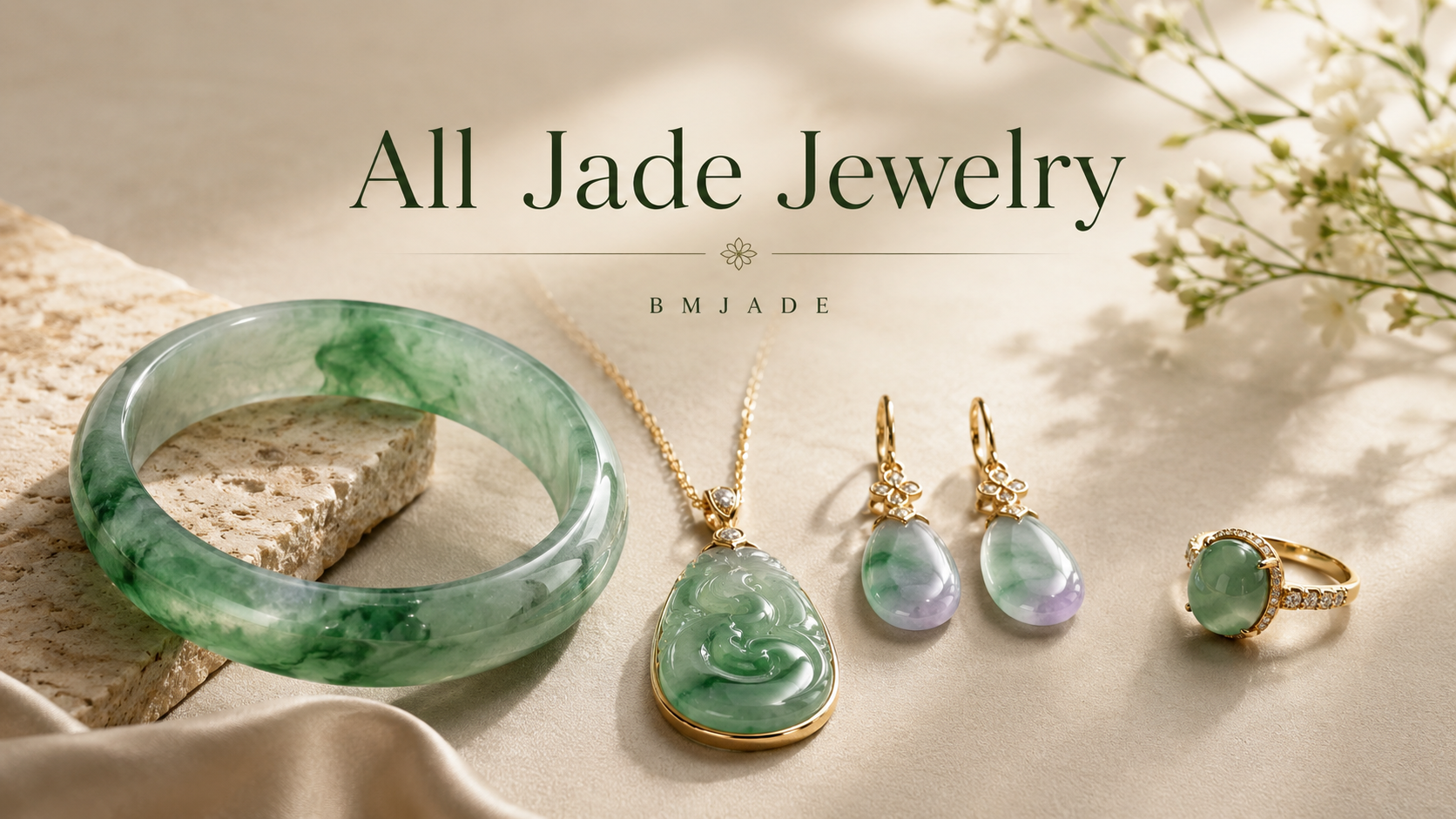
If you are choosing a jade Buddha pendant for daily wear, gifting, or personal meaning, start with a natural jadeite necklace that has clear material disclosure, secure construction, and reliable certification.
Quick Answer: What Does a Jade Buddha Pendant Mean?
A jade Buddha pendant usually symbolizes joy, contentment, protection, generosity, blessing, peace, and the release of emotional burdens. In Chinese jade jewelry, the Buddha figure is most often Budai, the Laughing Buddha, rather than the historical Buddha Shakyamuni.
Traditionally, jade Buddha pendants are often associated with:
- Happiness and an open heart
- Protection and blessing
- Letting go of worry
- Generosity and abundance
- Emotional calm
- Good fortune
- A peaceful attitude toward life
In Chinese folk tradition, there is a saying: “men wear Buddha, women wear Guan Yin.” This is a cultural guideline, not a strict religious rule. Men, women, and non-Buddhists can wear jade Buddha pendants if they do so respectfully and understand the meaning of the symbol.
A jade Buddha pendant should be understood as a cultural and symbolic object, not as a guaranteed source of luck, healing, or protection.
Who Is the Laughing Buddha on Jade Pendants?
The smiling Buddha figure seen on many jade pendants is usually Budai, often called the Laughing Buddha. In Chinese, Budai means “cloth bag,” referring to the sack he is often shown carrying.
Budai is commonly depicted with:
- A smiling or laughing face
- A round belly
- A relaxed seated or standing posture
- A cloth bag
- Prayer beads or symbolic objects
- Children, coins, or blessing imagery in some carvings
In East Asian Buddhist and folk traditions, Budai became associated with joy, generosity, abundance, and the future Buddha Maitreya. In Western contexts, he is sometimes mistaken for the historical Buddha, but they are not the same figure.
This distinction is important for jade jewelry buyers. A Laughing Buddha jade pendant usually does not represent solemn meditation or strict religious teaching. It more often represents happiness, generosity, blessing, and the ability to carry life’s burdens with a lighter heart.
Laughing Buddha vs Shakyamuni Buddha Pendant
Not all Buddha pendants have the same meaning.
Laughing Buddha / Budai
A Laughing Buddha pendant usually symbolizes joy, contentment, generosity, good fortune, and emotional release. This is the most common Buddha figure in Chinese jade pendants.
Best for:
- Daily blessing
- Happiness
- Emotional lightness
- Good fortune
- Gift-giving
- A warm, approachable symbol
Shakyamuni Buddha
Shakyamuni Buddha refers to the historical Buddha, Siddhartha Gautama. Pendants or images of Shakyamuni usually feel more meditative, spiritual, and solemn.
Best for:
- Buddhist practice
- Meditation
- Mindfulness
- Spiritual learning
- Inner discipline
Most jade Buddha pendants sold as everyday jewelry are Laughing Buddha / Budai designs. If a pendant is specifically meant to represent Shakyamuni, the seller should describe it clearly.

What a Jade Buddha Pendant Symbolizes
A jade Buddha pendant carries several layers of meaning. The meaning comes from both the Buddha figure and the jade material.
Joy and Contentment
The Laughing Buddha’s smile is his most important feature. It represents the ability to remain joyful and open-hearted, even when life is difficult.
A jade Buddha pendant can remind the wearer not to carry every worry too heavily.
Release of Burdens
Budai’s cloth bag is often interpreted as a symbol of carrying and releasing life’s burdens. This makes the pendant meaningful for people who want a reminder to let go of resentment, stress, or emotional heaviness.
This should be understood as symbolic mindfulness, not medical or psychological treatment.
Generosity and Abundance
The Laughing Buddha is often connected with generosity, giving, and abundance. His round belly is sometimes associated with fullness, tolerance, and good fortune.
A jade Buddha pendant can therefore symbolize a generous heart and a life that welcomes blessings.
Protection and Blessing
In Chinese jade culture, Buddha pendants are often worn as protective and blessing symbols. A parent may give one to a child, a partner may give one to a loved one, or a person may choose one for daily peace of mind.
Calm and Compassion
Although the Laughing Buddha is joyful rather than solemn, his meaning still connects with kindness, patience, compassion, and emotional balance.
A jade Buddha pendant can become a quiet reminder to respond to life with more softness and less anger.

Why Jade Makes the Buddha Pendant More Meaningful
Jade has a special place in Chinese culture. It has long been associated with virtue, purity, refinement, protection, dignity, and lasting value. When a Buddha figure is carved in jade, the pendant combines two symbolic traditions:
- Buddha / Budai symbolism: joy, blessing, generosity, emotional release
- Jade symbolism: virtue, harmony, protection, purity, longevity
This combination makes a jade Buddha pendant especially meaningful for personal wear and gifting.
A Buddha pendant made from natural jadeite feels different from one made from glass, resin, or dyed stone because jade itself carries cultural value. For jadeite jewelry, treatment status also matters. A Type A jadeite pendant is natural jadeite that has not been chemically bleached, dyed, or polymer-impregnated.
For a religious or symbolic pendant, many buyers prefer natural untreated jade because it feels more materially honest and culturally respectful.
Men Wear Buddha, Women Wear Guan Yin: What It Really Means
In Chinese folk jewelry tradition, there is a common saying:
“Men wear Buddha, women wear Guan Yin.”
This phrase does not mean women are forbidden from wearing Buddha pendants or men are forbidden from wearing Guan Yin. It is a traditional symbolic pairing.
The usual explanation is:
- Buddha, especially the Laughing Buddha, reminds men to be open-hearted, tolerant, joyful, and less burdened by anger or pressure.
- Guan Yin, the bodhisattva of compassion, is associated with mercy, care, protection, and gentle wisdom.
In modern jade jewelry, this rule is flexible. A woman can wear a jade Buddha pendant if she connects with its meaning. A man can wear Guan Yin if he values compassion and protection. The best choice depends on personal belief, comfort, and intention.
For the complementary tradition, you can read BMjade’s Guan Yin jade pendant meaning guide.
Who Should Wear a Jade Buddha Pendant?
A jade Buddha pendant can be meaningful for many types of wearers.
| Wearer or Gift Recipient | Why a Buddha Pendant Fits | Notes |
|---|---|---|
| Men | Joy, openness, release of burden | Connects with the traditional “men wear Buddha” saying |
| Elders | Blessing, peace, longevity | Suitable for birthdays or family gifts |
| Children | Gentle blessing and protection in some families | Choose small, safe, comfortable designs |
| Meditation practitioners | Mindfulness and calm | Shakyamuni-style designs may also fit |
| People in stressful life stages | Reminder to soften worry and stay grounded | Symbolic meaning, not medical treatment |
| Gift recipients | Happiness, blessing, generosity | Good for meaningful personal gifts |
| Jade collectors | Cultural symbolism and craftsmanship | Choose Type A jadeite and fine carving |
A jade Buddha pendant is especially suitable for someone who appreciates warm, joyful symbolism rather than fierce guardian imagery.
Can Women Wear a Jade Buddha Pendant?
Yes. Women can wear jade Buddha pendants.
The saying “men wear Buddha, women wear Guan Yin” is a folk guideline, not a strict law. Many women wear Buddha pendants because they value joy, protection, blessing, and emotional lightness.
A woman may choose a jade Buddha pendant if she likes:
- Laughing Buddha symbolism
- Gentle good-luck jewelry
- Warm and cheerful jade designs
- Personal reminders of calmness
- Cultural Chinese jade jewelry
- Meaningful spiritual symbols
For a softer look, choose lavender jade, icy jade, white jade, or a smaller pendant. For a stronger traditional look, green jadeite is a classic choice.
Can Non-Buddhists Wear a Buddha Pendant?
Yes, non-Buddhists can wear a Buddha pendant if they do so respectfully.
A Buddha pendant should not be treated as a random fashion object without understanding. It represents a religious and cultural figure, so wearing it with respect matters.
Respectful wearing means:
- Understanding the symbol
- Avoiding disrespectful placement
- Not treating it as a costume
- Keeping it clean and cared for
- Avoiding exaggerated claims
- Choosing authentic materials when possible
Some people wear a Buddha pendant for Buddhist faith. Others wear it for Chinese cultural meaning, family tradition, or personal symbolism. Both can be acceptable when the wearer approaches the piece with respect.
Is It Disrespectful to Wear a Buddha Necklace?
It depends on how it is worn and understood.
For many people, wearing a Buddha pendant close to the heart is a sign of respect, blessing, and personal meaning. In Chinese jade jewelry, Buddha pendants are widely worn and gifted.
However, some Buddhist communities may feel differently about using sacred images as fashion jewelry, especially if the pendant is worn carelessly or placed in disrespectful settings.
To wear a jade Buddha necklace respectfully:
- Do not wear it as a joke or costume.
- Do not place it on the floor.
- Do not wear it in inappropriate or disrespectful settings.
- Keep it clean.
- Treat it as a meaningful symbol.
- Learn what the figure represents.
When in doubt, choose a design that feels culturally appropriate and personally sincere.
Jade Buddha Pendant Color Meanings
The color of a jade Buddha pendant changes its feeling and symbolism.
| Jade Color | Buddha Pendant Meaning | Best For |
|---|---|---|
| Green jadeite | Blessing, prosperity, harmony, vitality | Classic jade gifts and daily wear |
| Icy jadeite | Clarity, refinement, calm, quiet luxury | Minimalist and modern wear |
| White jade | Purity, peace, restraint, spiritual calm | Elegant and contemplative gifts |
| Yellow or honey jade | Warmth, optimism, joy, abundance | Cheerful blessing symbolism |
| Lavender jade | Softness, emotional gentleness, grace | Personal wear and romantic gifts |
| Dark jade | Grounding, seriousness, protection | Bold or masculine styling |
| Multicolor jade | Layered blessing and individuality | Unique personal gifts |
Green jadeite is the most classic choice. White or icy jade feels more serene. Lavender jade feels gentle and personal. Yellow jade suits the Laughing Buddha especially well because it visually supports joy, warmth, and abundance.
Color meaning should guide the choice, but it should not replace authenticity. A natural Type A jadeite pendant with softer color is often more trustworthy than a bright treated pendant with uncertain material.
How to Judge Buddha Carving Quality
A jade Buddha pendant depends heavily on carving quality. Because the face and expression carry the meaning, the carving should feel clear, balanced, and intentional.
Look for:
A Clear Smile
The smile should feel warm and natural, not stiff or distorted. For Laughing Buddha pendants, the smile is central to the meaning.
Balanced Proportions
The head, belly, hands, robe, and posture should feel harmonious. Poor proportions can make the carving look awkward.
Smooth Polish
The jade should feel smooth against the skin. Rough edges around the face, belly, or pendant hole may suggest poor workmanship.
Clean Details
Look at the eyes, mouth, robe folds, hands, and surrounding motifs. Details do not need to be overly complex, but they should be deliberate.
Secure Bail or Hole
A pendant should hang safely. Check whether the bail, drill hole, or metal setting is clean, stable, and suitable for the pendant weight.
No Hidden Cracks
Pay attention to the top of the pendant, edges, and areas near the bail. Cracks in these areas can affect wearability.
A good jade Buddha pendant should feel peaceful, stable, and well finished.
How to Wear a Jade Buddha Pendant Respectfully
A jade Buddha pendant can be worn daily, but it should be treated with care.
Wear It Close to the Heart
Many people wear Buddha pendants on the chest because the position feels personal and respectful. The pendant does not need to be extremely short; it should sit comfortably.
Keep It Clean
Wipe the pendant after wearing. Avoid perfume, sweat buildup, lotion, and harsh chemicals.
Remove It During Showering or Swimming
A jade necklace may include a chain, bail, cord, glue, or metal setting. Remove it before showering, swimming, hot tubs, and saunas.
Store It Separately
Do not throw the pendant into a jewelry box with hard metal or gemstones. Store it in a soft pouch or lined box.
Avoid Disrespectful Placement
Do not place the pendant on the floor, in dirty areas, or in places where it may be stepped on or damaged.
Wear It With Intention
A Buddha pendant is most meaningful when the wearer understands what it represents.
Should a Buddha Pendant Face Outward?
Unlike Pixiu pendants, which often have directional wearing rules, Buddha pendants are usually simpler.
A jade Buddha pendant should generally face outward so the figure is visible and upright. This is mostly about respect and design, not strict feng shui.
Make sure the pendant:
- Hangs upright
- Does not flip constantly
- Does not sit too tightly
- Does not face downward
- Is supported by a secure chain or bail
If the pendant keeps turning backward, the issue may be chain weight, bail design, or necklace length.
Can You Sleep With a Jade Buddha Pendant?
It is usually better to remove a jade Buddha pendant before sleeping.
Sleeping with a necklace can pull the chain, bend the bail, press the pendant against the body, or cause the necklace to tangle. If the pendant is carved, heavy, repaired, or valuable, removing it is safer.
From a respect perspective, some wearers also prefer to remove religious or symbolic jewelry before sleep and place it in a clean, safe location.
If you choose to sleep with it, make sure the chain is strong, the pendant is not sharp, and it does not feel uncomfortable.
How to Clean and Care for a Jade Buddha Pendant
For home care, keep the cleaning method simple.
Use a soft microfiber cloth after wearing. If the pendant needs deeper cleaning, use lukewarm water and a tiny amount of mild soap. Wipe gently, rinse away residue, and dry the pendant, bail, chain, and clasp completely.
Avoid:
- Toothpaste
- Baking soda
- Vinegar
- Alcohol
- Bleach
- Ammonia
- Jewelry dips
- Harsh silver cleaners touching jade
- Ultrasonic cleaners at home
- Steam cleaners at home
- Long soaking if the necklace has a bail, cord, glue, or repair
Normal indoor light is generally fine for jade. The bigger risks are high heat, strong chemicals, acids, rough contact, and unknown treatment history.
If the pendant has a silver chain, clean the chain carefully and avoid rubbing silver polishing cloth aggressively across the jade.
How to Choose an Authentic Type A Jade Buddha Pendant
A meaningful Buddha pendant should be authentic and clearly described.
When buying a jade Buddha pendant, check:
- Is the jade identified as jadeite or nephrite?
- If jadeite, is it Type A?
- Is there a certificate?
- Does the certificate match the pendant?
- Is treatment status disclosed?
- Are photos natural and clear?
- Is the carving quality good?
- Is the bail secure?
- Is the pendant comfortable for daily wear?
- Is the price realistic for the claimed quality?
For jadeite, Type A means natural jadeite that has not been chemically bleached, dyed, or polymer-impregnated.
Avoid vague listings that only say:
- Natural green stone
- Jade color pendant
- Buddha charm
- Chinese jade style
- Grade A look
- Lucky jade necklace
These phrases do not confirm Type A jadeite.
At BMjade, we focus on certified Type A natural jadeite jewelry because buyers deserve confidence. If you are choosing a Buddha pendant for protection, blessing, or personal meaning, the jade should be natural and honestly represented.
You can explore BMjade’s jade necklace collection for certified Type A jadeite pendants suitable for daily wear and meaningful gifting.
Is a Jade Buddha Pendant a Good Gift?
Yes. A jade Buddha pendant can be a very meaningful gift.
It can symbolize:
- Joy
- Blessing
- Peace
- Protection
- Good fortune
- Emotional lightness
- Generosity
- Long-term care
It is suitable for:
- Birthday gifts
- Father’s Day gifts
- Gifts for husbands or boyfriends
- Graduation gifts
- Career transition gifts
- Gifts for elders
- Family blessing gifts
- Personal encouragement gifts
A jade Buddha pendant works best when the recipient appreciates cultural meaning or spiritual symbolism. If they prefer very simple jewelry, choose a smaller and more subtle design.
Adding a short message card can make the gift more meaningful:
“This jade Buddha pendant is a wish for joy, peace, and protection in your daily life.”

Common Mistakes When Buying a Jade Buddha Pendant
Confusing Every Buddha Pendant With Shakyamuni
Most Chinese jade Buddha pendants show Laughing Buddha / Budai, not the historical Buddha. Know which figure you are buying.
Choosing Only by Color
Bright green jade may look attractive, but color alone does not prove quality. Check treatment status and certification.
Ignoring the Face
The face is the heart of the carving. A poorly carved smile can weaken the pendant’s emotional impact.
Buying Treated Jade Without Knowing It
Dyed or polymer-treated jadeite should not be sold as untreated Type A jadeite.
Choosing a Pendant Too Heavy for the Chain
A heavy jade Buddha pendant needs a strong bail and chain. Weak hardware can cause loss or damage.
Treating It Like Ordinary Fashion Jewelry
A Buddha pendant has cultural and religious meaning. Wear and store it respectfully.
FAQ About Jade Buddha Pendants
What does a jade Buddha pendant mean?
A jade Buddha pendant usually symbolizes joy, contentment, protection, generosity, blessing, peace, and the release of emotional burdens. Most Chinese jade Buddha pendants represent Laughing Buddha / Budai.
What does a Laughing Buddha jade pendant mean?
A Laughing Buddha jade pendant symbolizes happiness, generosity, abundance, emotional lightness, and good fortune. It is one of the most popular Buddha figures in Chinese jade jewelry.
Is a jade Buddha pendant good luck?
Many people consider a jade Buddha pendant a good-luck symbol. It should be understood as cultural and symbolic meaning, not a guaranteed result.
What is the difference between Laughing Buddha and Shakyamuni Buddha?
Laughing Buddha usually refers to Budai, a joyful Chinese Buddhist figure associated with Maitreya. Shakyamuni Buddha refers to the historical Buddha, Siddhartha Gautama.
How should I wear a jade Buddha necklace?
Wear it upright, close to the chest, and with respect. Remove it before showering, swimming, sleeping, or rough activities.
Should a Buddha pendant face outward?
Yes, it should generally face outward and hang upright so the figure is visible and respectfully positioned.
Can men wear jade Buddha pendants?
Yes. In Chinese folk tradition, Buddha pendants are especially common for men because they symbolize openness, joy, tolerance, and release of burden.
Can women wear jade Buddha pendants?
Yes. Women can wear jade Buddha pendants if they connect with the meaning. The “men wear Buddha, women wear Guan Yin” saying is a tradition, not a strict rule.
Can non-Buddhists wear Buddha jewelry?
Yes, if worn respectfully. Understanding the symbol and treating it with care is important.
Is it disrespectful to wear a Buddha necklace?
It can be respectful if worn sincerely and cared for properly. It may feel disrespectful if treated as a joke, costume, or careless fashion object.
What jade color is best for a Buddha pendant?
Green jadeite is the classic choice. Yellow jade suits joyful Laughing Buddha symbolism. White or icy jade feels calm and spiritual. Lavender jade feels soft and personal.
Can I rub the Buddha belly for luck?
Some people rub the Laughing Buddha belly as a folk good-luck gesture. If you do this, be gentle and respectful. Do not scratch or damage the jade surface.
Can I sleep with a jade Buddha pendant?
It is usually better to remove it before sleeping to protect the chain, bail, and pendant.
Can I shower with a jade Buddha pendant?
No. Remove it before showering. Water, soap, shampoo, steam, and chemicals can affect the chain, bail, cord, or metal parts.
Why does Type A jadeite matter for Buddha pendants?
Type A jadeite is natural untreated jadeite. For symbolic or religious jewelry, many buyers prefer natural jade because it feels more honest, valuable, and respectful.
How do I know if a jade Buddha pendant is real?
Check whether the material is jadeite or nephrite, ask for treatment disclosure, look for a certificate, inspect carving quality, and avoid vague listings without proof.
Is a jade Buddha pendant a good gift?
Yes. It can express joy, blessing, protection, peace, and good fortune. It is especially meaningful for people who appreciate jade culture or Buddha symbolism.
Final Thoughts
A jade Buddha pendant is meaningful because it combines the cultural value of jade with the joyful symbolism of the Laughing Buddha. It can represent happiness, generosity, blessing, protection, peace, and the ability to let go of emotional burdens.
Most jade Buddha pendants in Chinese jewelry show Budai, the Laughing Buddha, rather than the historical Buddha. Understanding this difference helps you choose the right pendant with more respect and confidence.
A good jade Buddha pendant should have a warm expression, balanced carving, smooth polish, secure construction, and honest material disclosure. For jadeite, Type A natural jadeite is the most trustworthy choice.
Whether you wear it for cultural connection, daily blessing, personal calm, or meaningful gifting, a jade Buddha pendant should feel respectful, authentic, and wearable.
At BMjade, we believe symbolic jade jewelry should be natural, verifiable, and made for real life. If you are ready to choose a jade Buddha pendant or another meaningful jade necklace, explore BMjade’s jade necklace collection and find a certified Type A jadeite piece that fits your style and intention.