
How to Identify High-Quality Jade Bangles Through Touch: A Tactile Guide
Jade bangles are prized for their beauty, cultural significance, and durability, but distinguishing genuine, high-quality pieces from imitations or lower-grade stones requires more than just a visual inspection. The way a bangle feels in your hand can reveal crucial details about its material, craftsmanship, and overall quality. By mastering tactile evaluation techniques, you can make informed decisions when selecting a jade bangle.
The Importance of Texture in Jade Quality Assessment
Smoothness and Polish
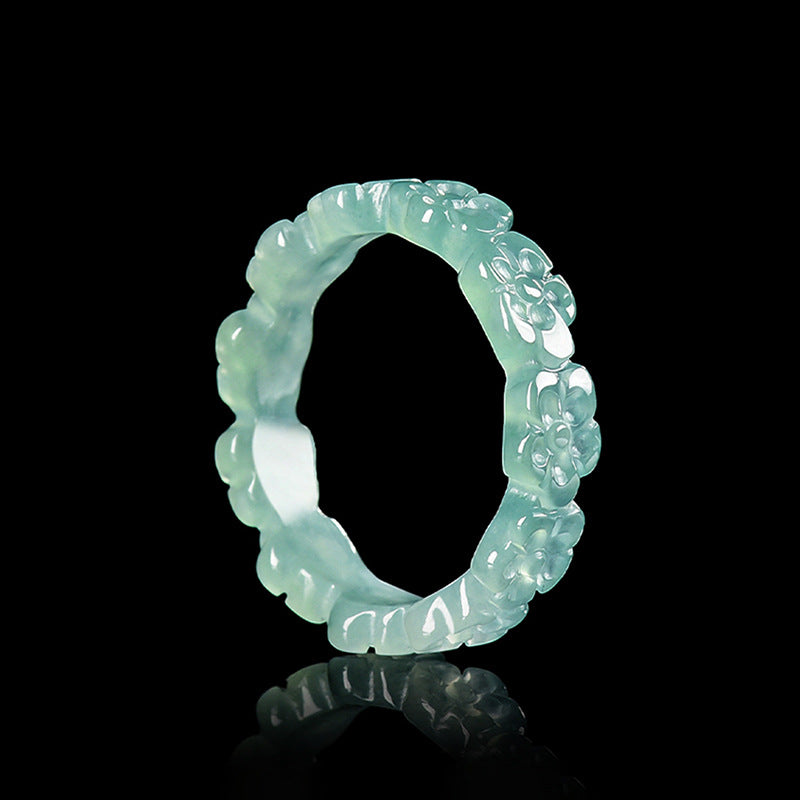
A high-quality jade bangle should feel exceptionally smooth to the touch, with no rough patches, pits, or uneven surfaces. Run your fingertips along the inner and outer curves of the bangle, paying close attention to areas near carvings or decorations. The polish should be consistent, creating a silky sensation that glides under your fingers. This smoothness indicates careful craftsmanship and a well-finished stone.
Resistance to Scratches
Genuine jade is relatively hard and resistant to scratches, especially when compared to imitations made from softer materials like glass or resin. Gently press your fingernail or a soft, non-abrasive tool against the surface of the bangle. If it leaves a visible mark or feels overly soft, the stone may not be authentic or could be of lower quality. However, avoid using sharp objects that could damage the bangle.
Temperature and Weight: Indicators of Authenticity
Coolness to the Touch
One of the most distinctive tactile properties of jade is its natural coolness. When you first pick up a genuine jade bangle, it should feel noticeably cooler than room temperature. This is because jade has high thermal conductivity, meaning it absorbs heat from your skin quickly. Hold the bangle in your hand for a few moments—if it warms up rapidly or feels lukewarm, it may not be real jade or could be a treated or imitation stone.
Substantial Weight
High-quality jade is dense, which gives it a satisfying heft when held. A well-crafted bangle should feel substantial in your hand, with a weight that matches its size. Lightweight bangles, especially those that feel unusually hollow or flimsy, may be made from inferior materials or hollowed-out imitations. To compare, hold the bangle alongside a similar-sized object of known material, such as a metal ring or a ceramic piece, to gauge its relative weight.
Structural Consistency and Craftsmanship
Even Thickness
A high-quality jade bangle will have uniform thickness throughout its circumference. Thin or uneven sections can create weak points, making the bangle more prone to cracking or breaking. Run your thumb and forefinger along the edges of the bangle, feeling for any variations in thickness. The transition between the inner and outer curves should be smooth and consistent, without any abrupt changes in width.
Absence of Sharp Edges
Well-crafted jade bangles are polished to eliminate sharp edges or rough spots that could irritate the skin or catch on clothing. Carefully examine the bangle’s edges, especially near any carvings or decorative elements. The transitions between different surfaces should be seamless, with no jagged or protruding parts. If you feel any discomfort or snagging while running your fingers over the bangle, it may indicate poor craftsmanship.
Natural Inclusions vs. Flaws: What to Feel For
Subtle Internal Features
Genuine jade often contains natural inclusions, such as tiny veins, specks, or cloud-like patterns, which are formed during the stone’s geological development. These inclusions are not flaws but rather signs of authenticity and uniqueness. When touching the bangle, you may feel slight variations in texture where these inclusions are located, but they should not be rough or disruptive. Instead, they should blend harmoniously into the overall feel of the stone.
Avoiding Cracks and Fractures
While natural inclusions are acceptable, cracks or fractures are serious flaws that compromise the bangle’s structural integrity. Use your fingertips to gently probe the surface of the bangle, feeling for any grooves, ridges, or irregularities that could indicate a crack. Pay special attention to areas near carvings or decorations, as these are common hiding spots for flaws. If you detect any signs of damage, the bangle may be at risk of breaking under normal wear.
By relying on your sense of touch, you can uncover valuable insights about a jade bangle’s quality, authenticity, and craftsmanship. Remember to combine tactile evaluation with visual inspections and, if possible, seek the opinion of a trusted expert. With practice, you’ll develop a keen ability to identify genuine, high-quality jade that will be cherished for generations.