
How to Assess Jade Bangle Quality Through Sound: A Practical Guide
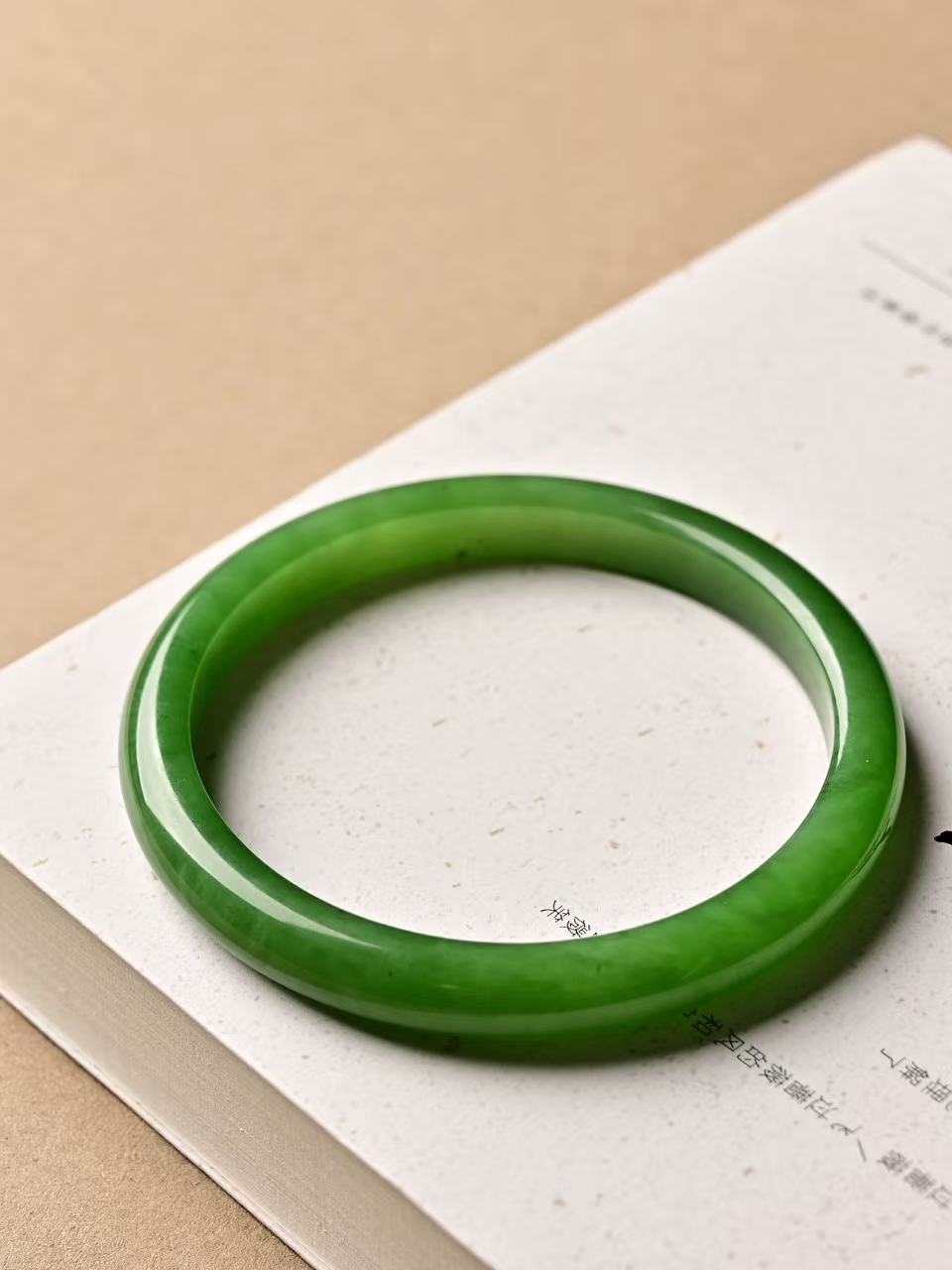
Jade bangles have been cherished for centuries, not only for their beauty but also for their cultural significance. One traditional method to evaluate their quality involves listening to the sound they produce when tapped or struck gently. While this technique requires practice and a discerning ear, it can provide valuable insights into the stone’s density, structure, and craftsmanship. Here’s how to use sound to identify a high-quality jade bangle.
Understanding the Science Behind the Sound Test
The Role of Density and Structure
The sound a jade bangle produces when tapped is influenced by its internal structure and density. High-quality jade is typically more compact and uniform, allowing sound waves to travel smoothly through the stone. This results in a clear, resonant tone. In contrast, lower-quality jade or imitations may have internal flaws, such as cracks, air pockets, or inconsistent material, which disrupt sound waves and produce dull or hollow sounds.
How Sound Reflects Craftsmanship
The way a bangle is carved and polished also affects its sound. A well-crafted bangle with smooth surfaces and even thickness will vibrate more efficiently, creating a consistent tone. Poorly made bangles, with rough edges or uneven sections, may produce irregular or muted sounds. This is why the sound test is often used alongside visual inspections to assess overall quality.
Performing the Sound Test Step-by-Step
Choosing the Right Tool for Tapping
To conduct the sound test, you’ll need a small, hard object that won’t damage the bangle. A traditional choice is a wooden or ivory mallet, but a pen, chopstick, or even the edge of a coin can work. Avoid using metal objects, as they may scratch the surface or produce overly harsh sounds that mask the stone’s true quality.
Finding the Ideal Tapping Spot
Gently tap the bangle at different points along its circumference, focusing on areas like the outer edge, inner curve, and sides. Avoid tapping near any carved designs or decorations, as these may alter the sound. Listen carefully to the tone produced at each spot—it should remain consistent throughout. If the sound varies significantly, it could indicate internal flaws or uneven craftsmanship.
Interpreting the Sound Results
A high-quality jade bangle will produce a clear, ringing sound that lingers briefly, similar to the tone of a bell. This indicates a dense, well-structured stone with minimal internal imperfections. In contrast, a dull or thudding sound suggests lower density or the presence of cracks, air pockets, or other flaws. A hollow or flat tone may also point to a fake or treated stone, as these often lack the natural resonance of genuine jade.
Common Sound Patterns and What They Mean
Clear, Resonant Tones
If the bangle emits a crisp, ringing sound that lasts for a second or two, it’s likely made of high-quality jade. This tone indicates that the stone is dense, free of major flaws, and has been crafted with precision. Such bangles are often more durable and visually appealing, making them a desirable choice for collectors and wearers alike.
Dull or Thudding Sounds
A dull or thudding sound is a red flag, as it suggests the bangle may be made of lower-quality material or contain internal flaws. This could include cracks, fractures, or areas where the stone is less dense. Bangles producing these sounds are often more prone to breaking or chipping, especially with daily wear.
Hollow or Flat Tones
A hollow or flat tone may indicate that the bangle is not genuine jade or has been heavily treated. For example, some imitations are made from glass, resin, or other materials that lack the natural density of jade. These stones often produce a lifeless sound when tapped, as sound waves cannot travel through them as effectively.
Combining the Sound Test with Other Evaluation Methods
Visual Inspection for Flaws
While the sound test is useful, it should not be the sole method of evaluation. Pair it with a thorough visual inspection to check for cracks, scratches, or uneven coloring. Use a magnifying glass to examine hard-to-see areas, such as the inner curve of the bangle. Even if a bangle produces a clear sound, visible flaws can still compromise its durability and aesthetic appeal.
Assessing Weight and Feel
High-quality jade bangles feel substantial and cool to the touch, thanks to their density. Hold the bangle in your hand and note its weight—it should feel heavier than it looks. Additionally, run your fingers along its surface to check for smoothness. A well-polished bangle will feel silky, while a rough or uneven texture may indicate poor craftsmanship.
By mastering the sound test and combining it with other evaluation techniques, you can confidently assess the quality of a jade bangle. Remember to tap gently, listen carefully, and always cross-reference your findings with visual and tactile inspections. With practice, you’ll develop an ear for identifying genuine, high-quality jade that will be cherished for years to come.